30.05.2017• Cabins
How Portable Cabins Are Being Used Across the UK
Updated April 2026
Business and Commercial Use
One area that has seen the widespread use of portable cabins is that of business. For many businesses, growth doesn’t happen in neat, predictable stages. Teams expand, projects scale up, and space suddenly becomes a constraint.
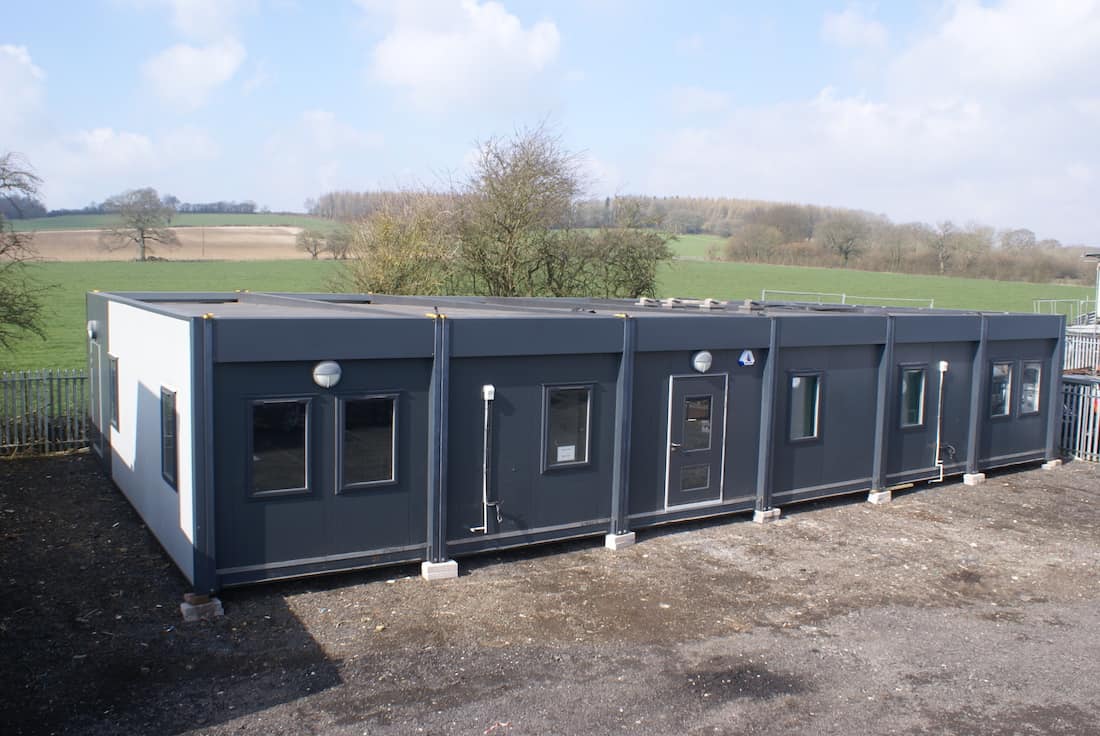
Portable office buildings are often required on sites that are perhaps medium-term in length but not permanent, such as housing developments or other construction projects. Their portability means that the office can be moved at the end of a contract and taken to the next if required, making it a cost-effective solution.
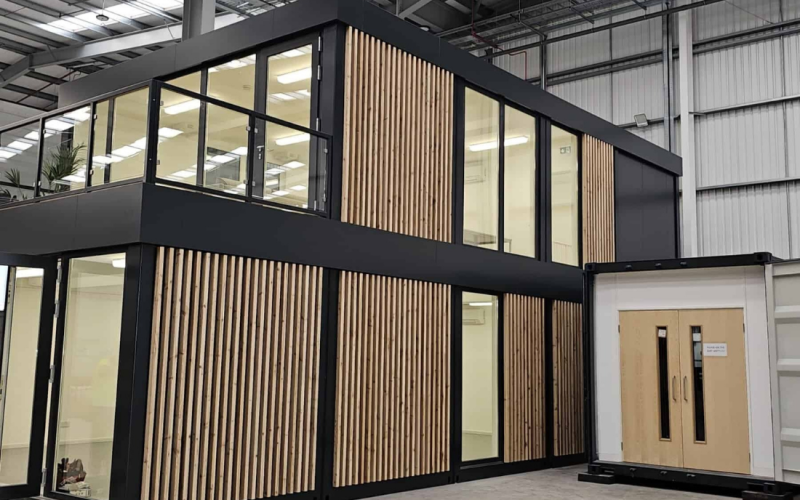
Modular buildings can also be stacked vertically, providing extra space on the same footprint. And because they can be connected to utilities and fitted with heating or plumbing, they provide a comfortable, practical working environment from day one.
Sales and Marketing Suites
In sectors like property and leisure, location matters. Being able to meet customers on-site (whether at a housing development, holiday park, or visitor attraction) can make a significant difference when trying to close deals.
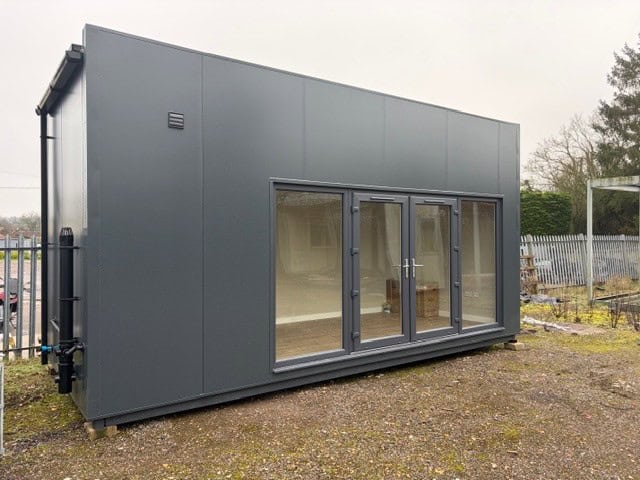
Which is why marketing and sales teams have also been using modular buildings for some time, creating an inviting, professional and on-brand space for meeting with customers on location.
With options for cladding, glazing, and interior fit-out, they can feel far removed from the “temporary cabin” image – and much closer to a permanent, purpose-built space.
Note: If you want to learn more about how to make the most of your on-site marketing suites, give our dedicated blog a read.

Construction and Development
Need offices that move with your construction projects? That’s a common need, which is why one of the most common uses for portable cabins is on construction and development sites.
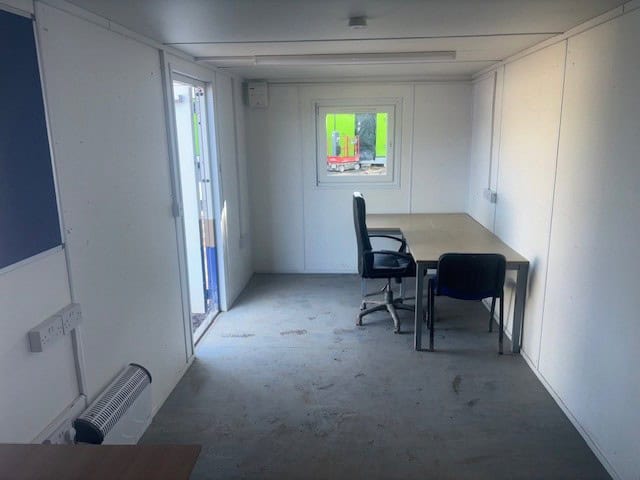
Projects often run for months or years, but not permanently, which makes investing in fixed infrastructure inefficient. Portable cabins provide fully functional site offices, welfare facilities, and meeting spaces that can be installed quickly and moved once the project is complete.
For developers, this means no wasted investment and no need to start from scratch on the next site.
Leisure and Community Facilities
Portable cabins are also being used in more community-focused settings.
From sports clubs needing changing rooms and shower facilities to local organisations requiring meeting or activity spaces, modular units are super practical and flexible. They’re easily fitted with plumbing and can therefore be fitted with hot water and showers as well as toilets and sinks – ideal for adapting to suit different needs.
Retail, Food and Pop-Up Concepts
Flexible retail continues to grow, especially in the form of pop-up shops, cafés, and seasonal businesses.
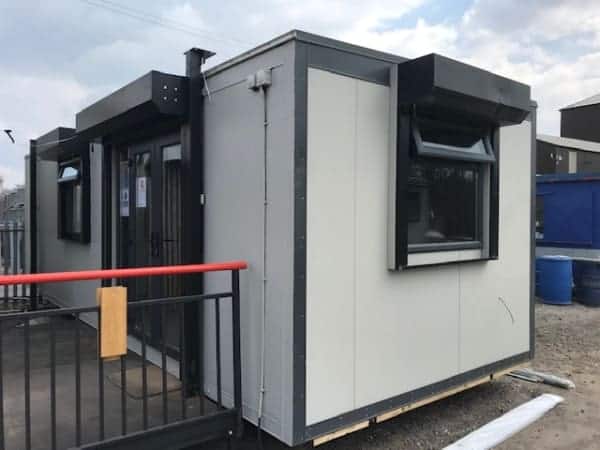
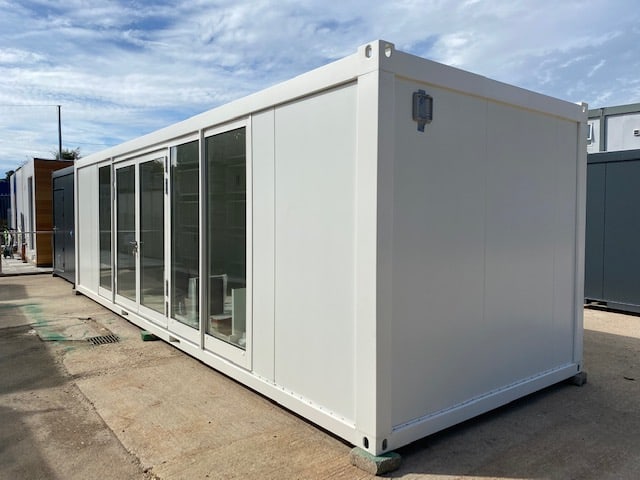
Portable cabins provide an ideal base for these ventures, especially when equipped with practical amenities and durable shower drainage solutions. Using cladding on the exterior walls transforms the appearance of the cabin, making it an attractive café option, whilst catering facilities can easily be installed in the modular units.
Also, beyond being customisable to create attractive, functional spaces that support customer-facing operations, they also offer the flexibility to relocate or adapt as needed.
For businesses testing a new concept or entering a new location, this reduces risk while maintaining a strong presence.
More Than a Temporary Solution
What ties all of these use cases together is one key advantage: flexibility.
Portable cabins allow organisations to create space exactly where and when it’s needed, without the cost, time or permanence of traditional construction. And with modern design, materials, and fit-out options, they offer a level of quality and usability that goes far beyond expectations.
At PF Modular, we work with clients across sectors to deliver portable cabin solutions that are practical, flexible, and built around real-world requirements.
If you’re exploring ways to create space quickly and efficiently, our team can help you find the right approach – and get you up and running without delay. Just give us a call at 01420 587880.
Related Posts
16.09.2026• Modular Buildings
Traditional vs. Modular: A Cost-Benefit Analysis for Growing SMEs
For a growing SME, needing more space is usually a good problem to have. More employees, new contracts, additional equipment or an expanding operation...
Continue Reading
09.09.2026• Modular Buildings
The Hybrid Hub: Why Satellite Offices Are Replacing the Central Headquarters
The word “headquarters” signifies the unquestioned centre of business. Employees travel to it, teams are organised around it, and workspace strategy largely involves deciding...
Continue Reading
12.08.2026• Modular Buildings, Posts & News
SEN-Friendly Design: Creating Inclusive Learning Spaces in Modular Classrooms
When discussing SEND provision, the conversation tends to revolve around staffing, funding, interventions and curriculum. The building itself is rarely even on the docket....
Continue Reading