15.04.2026• Posts & News
Circular Construction: The Case for Buying Refurbished Modular-Constructed Buildings

Construction has mostly always followed a familiar pattern: if you need space, you build space. But that old-fashioned approach is feeling increasingly out of sync with reality.
Budgets are tighter, sustainability targets are stricter, and timelines leave little room for drawn-out projects.
So the question is shifting from “What can we build?” to “What can we reuse – and do better?”
Circular construction is a very clever answer to this question. Rather than defaulting to starting from scratch, it focuses on getting more life, more value, and more performance out of what already exists. And few building methods lend themselves to that thinking quite like modular ones.
Most people already understand the speed and efficiency of modular construction. What’s often overlooked, however, is the potential of refurbished modular-constructed buildings – high-quality units that have been upgraded, reconfigured, and made ready for a second life. For organisations trying to balance cost, speed, and environmental responsibility, it’s not just a viable option – it’s often the smartest one.
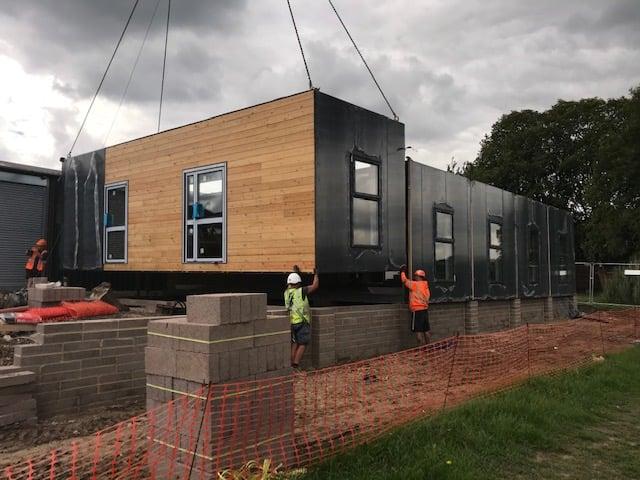
What is circular construction, and why does it matter?
Circular construction is built on a simple principle: keep reusing materials and buildings for as long as possible. Instead of demolishing and starting from scratch, existing structures are being reused and upgraded, sometimes for a completely new purpose/application.
Worldwide, the built environment and construction sector accounts for 38% of global carbon emissions, and that doesn’t even look at material waste. The traditional construction industry uses sand, gravel, clay, limestone, and other minerals, as well as large amounts of cement, steel, copper, and plastics. All in all, the built environment accounts for a whopping 50% of all global material extraction. With the UK needing to achieve Net Zero by 2050, these carbon emissions and material waste are simply major issues.
Refurbishing existing modular units helps tackle both of these issues. The construction process involved hugely reduces the demand for new raw materials and construction waste, thereby lowering the embodied carbon. Wins all around.
The lifespan of modular constructed buildings: built to last
One of the biggest misconceptions about modular-constructed buildings is that they don’t have a long life span and are intended for short-term use. In reality, high-quality modular-constructed buildings are designed to last for decades!
Modular-constructed buildings are built according to modern manufacturing standards with robust steel frames and high-quality, durable materials. Their solidity and flexibility make them ideal candidates for refurbishment and reuse.
Unlike traditional buildings, modules can be:
- Relocated to new sites
- Reconfigured for different uses
- Refurbished to modern standards
This inherent flexibility is what makes modular-constructed buildings such a handy and brilliant tool for sustainable development.
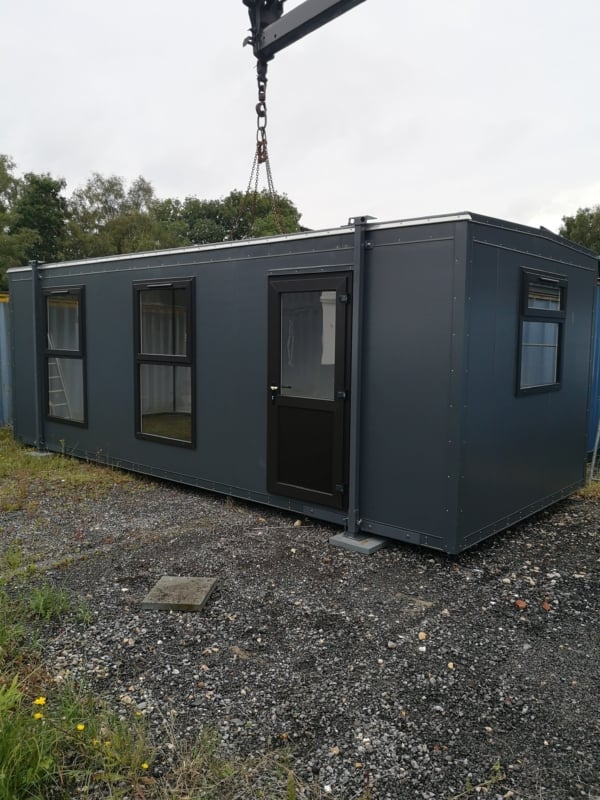
‘Refurbished’ doesn’t mean ‘second best’.
The word “used” can sometimes carry the wrong ideas, but in modular construction, it’s a lot better than you think.
At PF Modular, our used modular buildings undergo a comprehensive upgrade process according to what they’ll next be used for. Our modular refurbishing process can include:
- Structural checks and reinforcements
- New interiors, finishes, and fittings
- Upgraded insulation and energy performance
- Electrical and mechanical system improvements
- Compliance updates to meet current regulations
The result? A building that performs like a brand new modular building but is constructed at a significantly lower cost and carbon footprint.
For many buyers, the difference between new and refurbished is almost indistinguishable once the modules are installed and in use.
More Value, Less Spend
Budget constraints are a reality across all sectors, and with the cost of living crisis ongoing, this isn’t likely to change any time soon. From education and healthcare to commercial and public projects, everyone has their limits.
Refurbished modular-constructed buildings offer a clear financial advantage in this landscape. They have far lower upfront costs than new builds, are available quicker, and have far less reliance on extensive groundwork or long lead times. In other words, they provide a practical way to deliver space without the usual financial strain.
For organisations that need to organise space quickly, whether it’s a new classroom, an extra office, or a suddenly important onsite marketing suite, our refurbished units can make that happen.
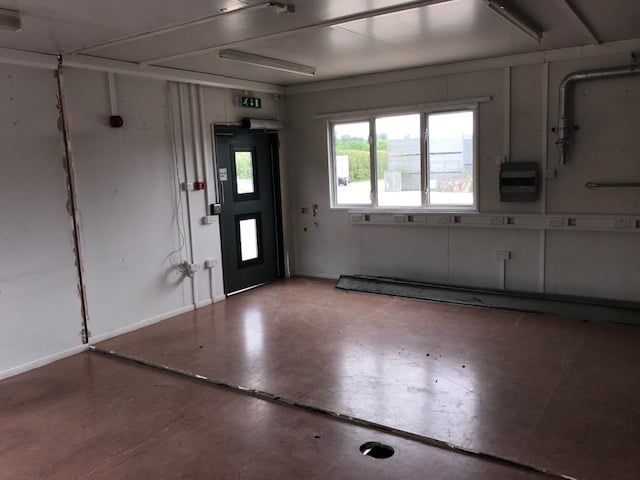
Reducing carbon without reducing quality
One of the most obvious reasons to choose refurbished modular-constructed buildings is the dramatic reduction they have in embodied carbon.
By reusing an existing structure, you avoid the massive emissions associated with manufacturing new materials. You cut out their transport and the need to construct from scratch. This makes refurbishment one of the most effective ways to lower a project’s environmental impact.
At the same time, modern upgrades ensure that performance isn’t sacrificed in any way. With improved insulation, energy-efficient systems, and updated interiors, refurbished buildings can meet (and often exceed) today’s expectations.
Rethinking “new” in construction
We want to remodel the future of construction. It isn’t just about building more; it’s about building better. And sometimes, that means recognising the value in what’s already in front of us.
By choosing modular-constructed buildings and refurbished units, businesses and organisations can unlock a solution that’s not only cost-effective but also extremely sustainable and, better yet, ready to perform from day one.
Because in a world where resources matter now more than ever, the smartest build might not be a new one, but a better use of one that’s already there.
Related Posts
16.09.2026• Modular Buildings
Traditional vs. Modular: A Cost-Benefit Analysis for Growing SMEs
For a growing SME, needing more space is usually a good problem to have. More employees, new contracts, additional equipment or an expanding operation...
Continue Reading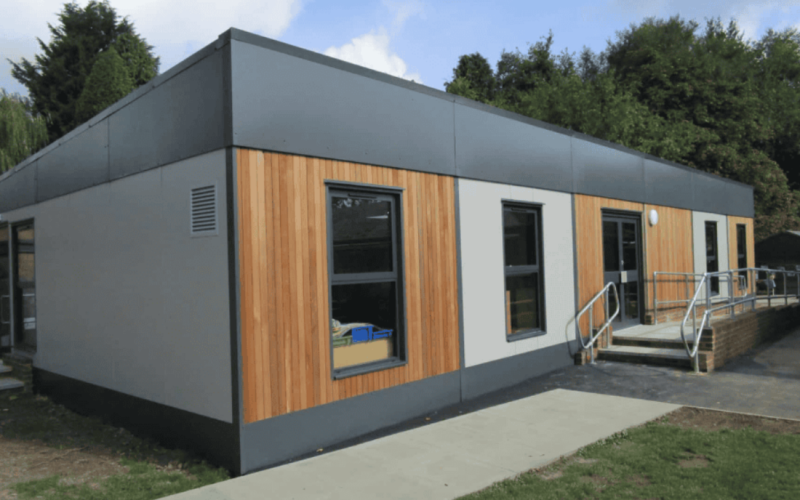
09.09.2026• Modular Buildings
The Hybrid Hub: Why Satellite Offices Are Replacing the Central Headquarters
The word “headquarters” signifies the unquestioned centre of business. Employees travel to it, teams are organised around it, and workspace strategy largely involves deciding...
Continue Reading
12.08.2026• Modular Buildings, Posts & News
SEN-Friendly Design: Creating Inclusive Learning Spaces in Modular Classrooms
When discussing SEND provision, the conversation tends to revolve around staffing, funding, interventions and curriculum. The building itself is rarely even on the docket....
Continue Reading