15.10.2026• Modular Buildings
Modern Methods of Construction (MMC) Explained: Where Modular Fits

Modern Methods of Construction (MMC) often come up when discussing ways to improve construction productivity, shorten programmes and deliver more predictable results. But MMC is a broad term. It covers seven categories – everything from fully manufactured buildings to prefabricated wall panels, 3D building components and technology that improves on-site work.
For public-sector procurement teams, architects and estates professionals, understanding the differences and where each comes into play is important. The method you choose will affect design, programme, site logistics, risk allocation, quality assurance and whole-life cost.
In this guide, we’re getting into the seven MMC categories, where modular buildings fit, the benefits and limitations to assess, and a few procurement considerations that can make the difference between a successful project and an expensive mismatch.
What Are Modern Methods of Construction?
Modern Methods of Construction is an umbrella term that covers the recently developed approaches to how buildings are designed, manufactured, assembled or delivered. The idea is to maximise the efficiency of material and human resources, and they can involve factory-based building, standardised components, new materials, or site processes improved with digital tools and technology.
The widely used UK MMC definition framework was published in 2019 by Gov.Uk.
The Ministry of Housing, Communities & Local Government. It identifies seven categories, helping clients and project teams describe different construction approaches with consistency.
One important note we want to make: MMC doesn’t automatically mean modular, fully factory-built or even faster. Some methods move most construction activity into a factory; others reduce site labour through prefabricated components or improved processes. Their benefits depend on the building, design, supply chain and delivery strategy.
For clients, MMC is best understood as a set of options to evaluate alongside project outcomes rather than an objective in its own right.
The Seven Categories of MMC Explained
The MMC framework groups the approaches by the extent and nature of pre-manufacturing, component production and site-based innovation. Categories 1 – 5 focus on pre-manufactured systems or components; Categories 6 and 7 cover products and processes that aim to reduce site labour or improve productivity. We’ll give you a snapshot, and then get into it:
Category 1: 3D primary structural systems
Category 2: 2D primary structural systems
Category 3: Non-systemised structural components
Category 4: Additive Manufacturing
Category 5: Non-structural assemblies and sub-assemblies
Category 6: Traditional building product-led site labour reduction/productivity improvements
Category 7: Site process-led labour reduction/productivity improvements
Category 1: 3D Volumetric modular construction
Category 1 involves three-dimensional structural units that are manufactured in a controlled environment before being transported to site. These are complete modular units rather than flat panels or individual components.
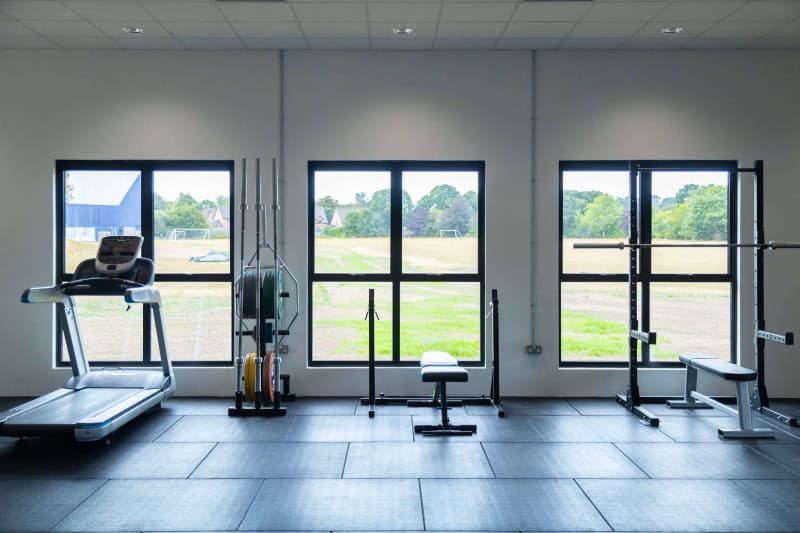
This is the category most people picture when they hear modular construction. It can create modular classrooms, offices, healthcare facilities, marketing suites and other buildings where bespoke layouts and off-site construction are best.
Category 2: 2D Panelised systems
Category 2 includes two-dimensional structural panels, such as wall, floor or roof sections, manufactured off-site and assembled on-site.
Unlike volumetric modules, panels don’t arrive as complete 3D rooms. They’re constructed on site to form the building’s structure, with services, insulation, cladding and internal finishes then installed according to the system and specification.
When flat-pack straightforwardness is what you’re looking for, panelised construction is ideal. The trade-off is that more on-site work is needed than with a fully fitted modular building.
Category 3: Non-systemised structural components
Category 3 covers pre-manufactured structural components that aren’t part of a complete, standardised structural system.
Instead, they’re structural elements that are manufactured in a factory before being incorporated into a building. The components reduce on-site fabrication work, but don’t necessarily arrive complete and ready to go up as a coordinated building system.
Category 4: Additive manufacturing
Category 4 covers processes like 3D printing, building up components layer by layer.
Applications and adoption vary, and the suitability of a 3D-printed element depends on its material, structural role, compliance requirements and the evidence available for its intended use.
For procurement teams, the most important thing here is to evaluate the specific application and verified performance rather than assume that a newer manufacturing technique is automatically suitable for every building.
Category 5: Non-structural assemblies and sub-assemblies
Category 5 includes pre-manufactured structures that are separate from a building’s primary structural system. Examples include bathroom pods, kitchen pods, plant-room assemblies, service risers and certain prefabricated wall or roof assemblies.
These components can be particularly valuable where the same detailed installation is repeated many times. Producing a bathroom pod in a factory, for example, can reduce the number of individual trades needed to complete that room on site.
Category 5 can be easily combined with other categories. A building may use a panelised structural system alongside factory-made bathroom pods, or modular units with separately manufactured plant assemblies.
Category 6: Product-led improvements to site productivity
Category 6 covers traditional building products that are designed to reduce installation labour. This can include large-format products, pre-cut components and products with simpler jointing systems.
The building will likely still be constructed on site, but the products themselves are designed to make the work more efficient.
Category 7: Site process-led improvements
Category 7 covers improvements to the construction process itself, rather than a particular pre-manufactured building system.
Examples for this one include lean construction techniques, digital planning tools, robotics, drones, verification technology and equipment that improves how workers carry out tasks.
These approaches can help reduce wasted effort, improve coordination and strengthen quality assurance. The key distinction of this MMC category is that it’s about improving the way work is delivered on site, not necessarily manufacturing more of the building in a factory.
Where Does Volumetric Modular Construction Fit?
Volumetric modular construction sits within MMC Category 1: pre-manufacturing of 3D primary structural systems.
In practice, the categories aren’t mutually exclusive. A modular building may incorporate prefabricated service assemblies, standardised products and digital site processes along with its Category 1 modules.
For architects and estates teams, the important questions are therefore:
- How much of the building will be manufactured off-site?
- Which components will arrive finished, and which require site installation?
- How much design flexibility is available within the chosen system?
- What are the transport, lifting and access constraints?
- Which party is responsible for design coordination, connections, compliance and final performance?
These questions reveal more about the proposed delivery method than the term “MMC” alone.
Tip: For a practical introduction to the building process, see PF Modular’s guide to what modular construction involves.
Why Are Public-Sector Clients Considering MMC?
The attraction of MMC isn’t simply that a building can now be manufactured in a factory. It’s in the potential to improve how a project is planned, delivered and managed over its life. Here are some of the most popular MMC benefits:
Shorter overall programmes
Factory production and site preparation can happen concurrently, which reduces the overall timeline.
That said, this benefit is project-specific. Design freeze dates, approvals, manufacturing capacity, transport and site readiness all have an effect on the final delivery date.
More controlled manufacturing
Factory production provides a controlled environment for repeatable work and inspection. It helps improve consistency, particularly when producing large quantities of similar modules or components.
That said, quality is not guaranteed by factory manufacture alone. Clients still need clear specifications, documented checks, appropriate certification and a robust handover process.
Less disruption on site
Moving more work off-site can reduce the number of trades, deliveries and construction activities at the final location.
This can be valuable for schools in term-time, healthcare spaces, operational facilities and constrained urban sites, where noise, access restrictions and disruption need to be managed carefully.
Potentially less waste
Controlled production and repeatable processes can make material use easier to plan and waste a lot easier to manage. The environmental outcome still depends on the materials, energy used, transport, site works, building performance and what happens at the end of the building’s life. For a manufacturer like PF Modular, sustainability, though, sustainability is one of the big benefits. We maintain excellent recycling programmes, and excess materials are stored properly and used on future projects rather than being wasted.
Greater repeatability
Where a client needs numerous similar facilities, or might need the same project repeated, standardised designs and components support this.
Schools, healthcare estates and public bodies managing multiple sites benefit from a coordinated approach, as long as the design can accommodate local site conditions and operational requirements.
Potential whole-life value
A shorter programme, reduced disruption and more predictable production contribute to value beyond the initial construction price. But whole-life value must include maintenance, energy use, durability, adaptability, replacement and disposal costs.
The right comparison is between solutions that meet the same requirements, not simply between their headline prices.
What Are the Limitations of MMC?
MMC can improve project delivery, but that doesn’t remove the need for good design, procurement and project management. Several risks should be given attention before you make your decision.
Design decisions often need to be made earlier
Off-site manufacturing depends on reliable information. Late changes to layouts, services or specifications can create redesign, rework or delays once production has started.
Transport and site access can constrain the design
Volumetric modules must be transported and lifted safely. Route restrictions, overhead obstructions, crane positions and limited access can affect feasibility and cost.
The supply chain needs to be suitable for the project
Manufacturing capacity, supplier experience, financial resilience, component availability and the ability to deliver the required specification should be assessed before committing to a system.
Standardisation can limit some forms of flexibility
]Repeatable modules can be efficient, but bespoke layouts, unusual sites or complex architectural requirements may need additional design work. A supplier should explain what can be changed and what is fixed by the system.
Payment and insolvency risks may differ
With off-site manufacture, much of the work must be paid for before delivery. Contracts should address ownership of materials, identification and protection of goods, insurance, payment milestones and what happens if a supplier becomes insolvent.
Compliance still needs to be demonstrated
Factory production does not remove obligations relating to planning, Building Regulations, fire safety, accessibility, structural performance or other requirements applicable to the building and its use.
MMC isn’t automatically cheaper
Transport, crane use, foundations, connections, specialist design and factory mobilisation can affect the total cost. The most appropriate method is the one that best meets the project’s requirements and risk profile.
Government Policy and MMC: What Should Public-Sector Buyers Know?
In order to improve construction productivity, quality and value, government policy is encouraging greater consideration of MMC. However, it’s important to distinguish policy support from a universal requirement to use modular construction.
The Cabinet Office’s Construction Playbook sets out guidance for the assessment, procurement and delivery of public works projects and programmes. It includes a dedicated focus on MMC, platform approaches, early supplier engagement, standardisation and whole-life value.
The accompanying MMC Guidance Note emphasises that MMC should be considered in relation to outcomes, not as an end in itself, and may not always be the best solution.
There are also sector-specific approaches. In England, the Department for Education’s MMC1 framework was established for off-site school construction, with standardised designs and routes for eligible local authorities, dioceses and academy trusts.
The broader lesson is that public-sector clients should assess MMC early, alongside conventional construction options, and document why the selected delivery approach offers the best result.
Where PF Modular Fits
PF Modular supplies modular buildings for education, commercial and other operational needs across the UK. Our range includes classrooms, school buildings, offices and specialist spaces, with bespoke options available across the board.
For public-sector estates teams and organisations considering modular construction, the starting point is to define the space required, the intended use, site constraints and delivery expectations. Those details help establish whether a modular solution is appropriate and what specification will be needed.
Explore the PF Modular building range or contact our team to discuss a project. We’d be happy to help you make the most of MMC.
Related Posts
29.10.2026• Modular Buildings
What Is a Modular Building? A Plain-English Guide for UK Buyers
Have you started looking into modular buildings and keep coming across different terms? Modular construction, off-site construction, prefabricated buildings and portable buildings might all...
Continue Reading
16.09.2026• Modular Buildings
Traditional vs. Modular: A Cost-Benefit Analysis for Growing SMEs
For a growing SME, needing more space is usually a good problem to have. More employees, new contracts, additional equipment or an expanding operation...
Continue Reading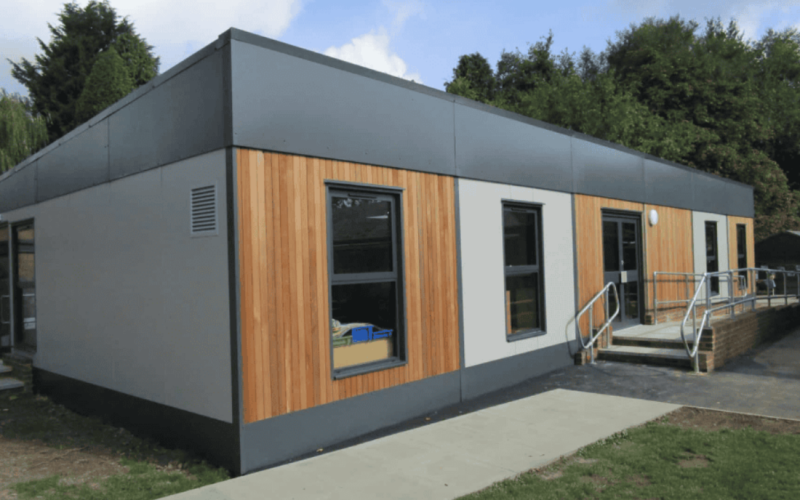
09.09.2026• Modular Buildings
The Hybrid Hub: Why Satellite Offices Are Replacing the Central Headquarters
The word “headquarters” signifies the unquestioned centre of business. Employees travel to it, teams are organised around it, and workspace strategy largely involves deciding...
Continue Reading