07.05.2026• Posts & News
Temporary or Permanent? Navigating Planning Permission for Modular Constructed Buildings
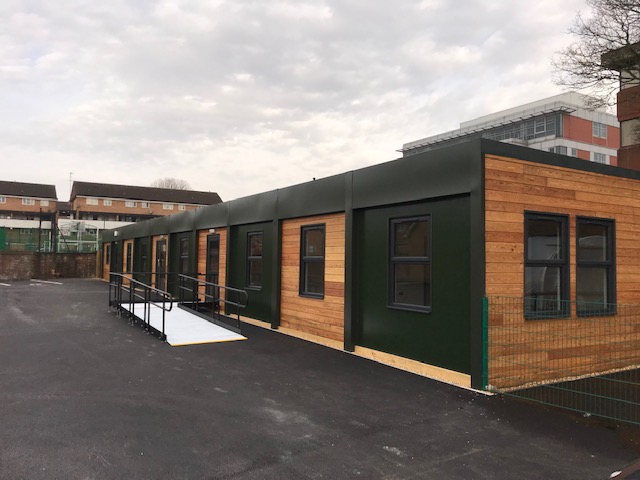
It’s always good to start at the beginning, but with modular buildings, where is that? It’s in the asking of important fundamental questions, like: “Is this building classified as temporary or permanent?” and “Do I need planning permission?”
With modular construction becoming more and more popular across the UK and the rest of the world, there’s still a lot of uncertainty around what’s considered “temporary” and what’s “permanent”, and where rules like the 28-day exemption actually apply.
You don’t want to get caught by red tape, we get it, but the reality is that planning permission for modular-constructed buildings isn’t nearly as complicated as it seems. We’ve got over 20 years of experience in the industry, so let’s get straight into it.
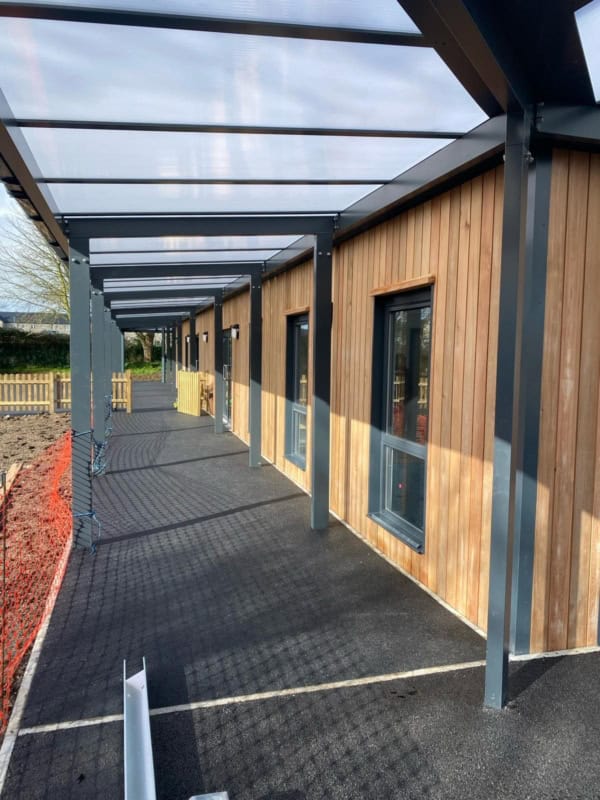
Are Modular-Constructed Buildings Temporary or Permanent?
One of the biggest myths about modular-constructed buildings is that they are always “temporary” structures.
In reality, modular construction is a method of building, not a classification. A modular-constructed building can absolutely be either a short-term solution (think site office or temporary classroom) or a long-term installation (like a permanent school block or office space).
What determines whether planning permission is required or not isn’t how the building is constructed. It’s how it’s used, how long it’s in place, and how it’s installed.
For these reasons, ‘modular’ is more often considered permanent than temporary.
Why? Because modern modular units are designed as high-quality, permanent assets. At PF Modular, they’re engineered, manufactured, and installed to perform just like traditional permanent buildings – with lifespans measured in decades, not years.
They can be fully integrated into existing infrastructure, meet all regulatory standards, and deliver the same level of comfort, safety, and performance expected from any permanent facility.
So, for example, a fully serviced modular-constructed building that’s connected to utilities and clearly intended for long-term use will almost always be treated as a permanent structure in planning terms.
And so, while modular construction methods can be used to create temporary structures like portable cabins, this should never be assumed to be the standard.

Understanding the 28-Day Rule
You’ll often hear the 28-day rule mentioned when discussing temporary buildings, but though it’s talked about, it’s all too often misunderstood.
To put it simply, this rule allows land to be used for certain purposes for up to 28 days per calendar year without requiring any full planning permission.
However, there are some important things to be aware of:
- It typically applies to temporary uses of land, not permanent structures
- It’s often used for events, pop-ups, or short-term site setups and not long-term building solutions
- Once you exceed 28 days, you’ll need planning permission
So while the rule can be useful in very specific scenarios, it’s not a route that can be taken for most modular-constructed building projects, particularly in important sectors like education, healthcare, or commercial environments.
When Does a Modular Structure Require Planning Permission in th UK?
As mentioned above, most modular units are considered permanent and will need planning permission. But to be more specific, you’ll need permission if:
- Will be in place for more than 28 days
- Is connected to permanent services (water, drainage, electricity)
- Has a fixed foundation or significant groundworks
- Will have a long-term impact on the site or surrounding area
With that being said, there are some important exceptions, particularly for schools. Let’s take a quick look:
Permitted Development: A Faster Route for Schools
For educational organisations, permitted development rights can offer a much simpler path than applying for full planning permission. These rights allow schools to expand or add buildings without needing that permission if they meet a certain set of criteria.
We’ve written an article explaining permitted development rights for schools in full, so you can give that a read if you want to know the specifics, but the basics are that schools can:
- Add new buildings or extensions within a defined footprint limit
- Build up to certain height restrictions
- Complete projects without going through the full planning application process
This can significantly shorten construction timelines, which often allows projects to move forward by months, never mind weeks. This type of speed is nothing short of a game-changer when considering trying to complete construction work during school holidays.
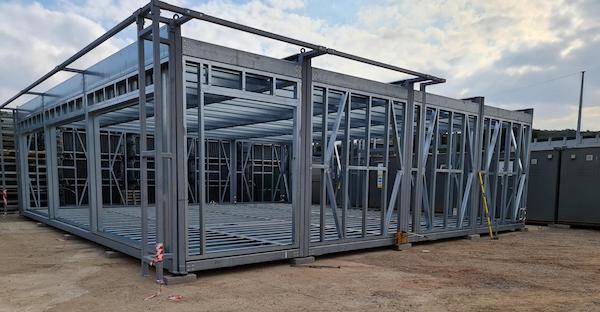
Why the Temporary vs Permanent Classification Matters
Understanding whether your building is built to be temporary or permanent isn’t just about ticking a box for planning permission – it has real, practical implications for how your project is designed, approved, and used.
This distinction influences everything from compliance requirements and building regulations to insurance, maintenance responsibilities, and long-term value. For example, a building that’s classed as permanent will typically need to meet stricter standards around energy performance, accessibility, and fire safety, while also being factored into long-term site planning and asset management.
The classification also affects how the building is perceived and used. “Temporary” structures are often treated as short-term fixes, which sometimes leads to compromises in specification, comfort, or durability. But this mentality increasingly gets in the way of reality.
Back to the planning perspective: the key is to be clear about your intended use from the beginning. Ask:
- How long will the building realistically be needed?
- Will it require full utility connections?
- Is future expansion or relocation likely?
Answering these questions early helps ensure the right planning route is taken.
How Modular Specialists Simplify the Process
Rather than leaving clients to navigate planning rules alone, here at PF Modular, we take a full-service approach, supporting your projects from start to finish.
Since planning and compliance can be complex and time-consuming if it’s not something you deal with every day (and we do), we take ownership of the process early on, identifying potential hurdles and resolving them before they become delays.
Our services typically include:
- Initial feasibility assessments to determine whether planning permission is required
- Guidance on permitted development eligibility
- Preparation and submission of planning applications where needed
- Coordination with local authorities and building control
- Ensuring compliance with all relevant regulations
In other words, all the complexities and fuss are handled behind the scenes, allowing you as our client to focus on the outcomes, not the paperwork.
This is particularly useful because planning permission isn’t just given out by one overarching authority, nor is there just one type of planning permission. Instead (and please note that we’ve left this till the end so as not to overwhelm you), there are local authority grants of planning permission, national grants of permission by the, local grants of planning permission, and development which is to be carried out by a local authority, national park authority or statutory undertaker.
We won’t even get into the governing bodies, but you can find them all here.
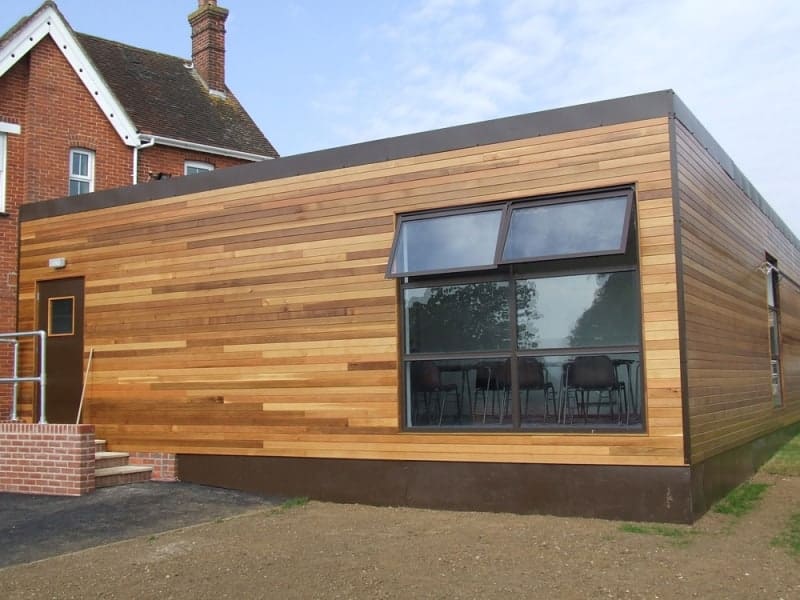
A Smarter Way Through the Red Tape
Planning permission will always be part of the construction process, but it needn’t be a barrier. With the right knowledge and the right partner, it’ll be a manageable step rather than a major obstacle.
For organisations figuring out how to add space, understanding the difference between temporary and permanent use (and knowing when rules like the 28-day exemption apply) is the key to making confident decisions.
And when it comes to delivering high-quality, compliant solutions, modular-constructed buildings offer a route that combines speed, flexibility, and long-term value. To find out more about PF Modular’s solutions, give us a call at 01420 587880 and our friendly team will be happy to help you explore your options.
Related Posts
16.09.2026• Modular Buildings
Traditional vs. Modular: A Cost-Benefit Analysis for Growing SMEs
For a growing SME, needing more space is usually a good problem to have. More employees, new contracts, additional equipment or an expanding operation...
Continue Reading
09.09.2026• Modular Buildings
The Hybrid Hub: Why Satellite Offices Are Replacing the Central Headquarters
The word “headquarters” signifies the unquestioned centre of business. Employees travel to it, teams are organised around it, and workspace strategy largely involves deciding...
Continue Reading
12.08.2026• Modular Buildings, Posts & News
SEN-Friendly Design: Creating Inclusive Learning Spaces in Modular Classrooms
When discussing SEND provision, the conversation tends to revolve around staffing, funding, interventions and curriculum. The building itself is rarely even on the docket....
Continue Reading