09.09.2026• Modular Buildings
The Hybrid Hub: Why Satellite Offices Are Replacing the Central Headquarters
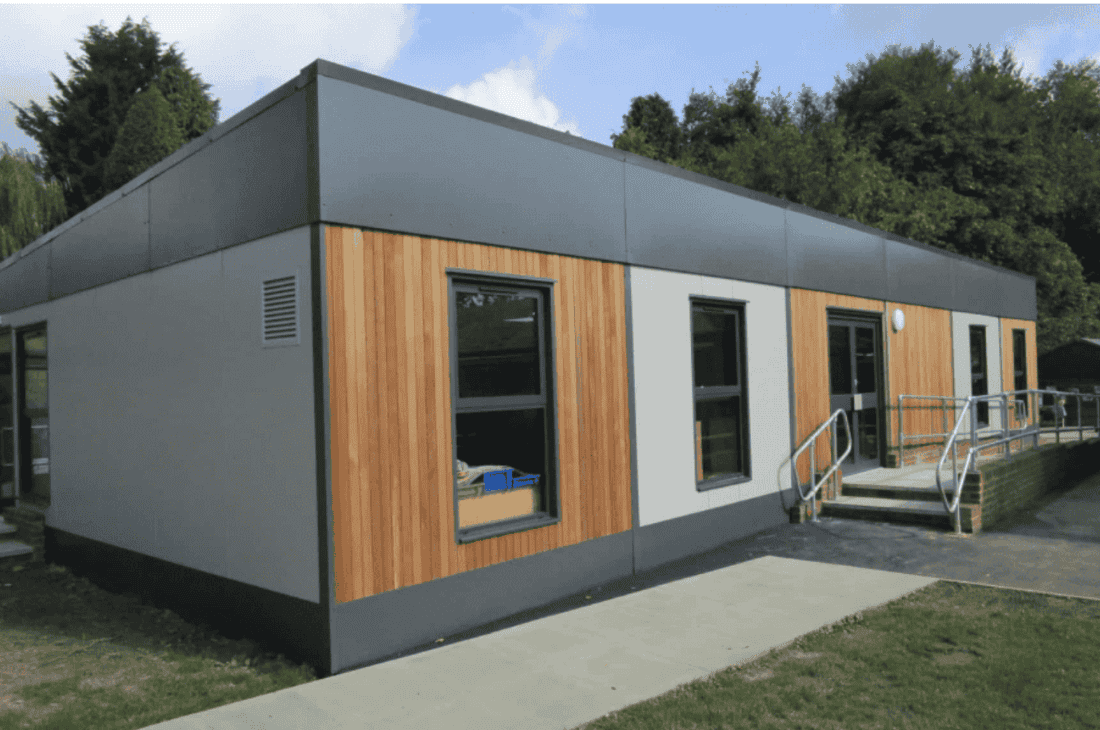
The word “headquarters” signifies the unquestioned centre of business. Employees travel to it, teams are organised around it, and workspace strategy largely involves deciding how much space’s needed under one roof. That model’s changing.
Hybrid working, online ease, wide-flung teams and changing employee expectations have made the daily commute to a single central office increasingly difficult for organisations to justify. Still, businesses need somewhere for their people to collaborate, meet clients, build relationships and actually spend time together.
So the response to these changes can’t be no office. It should be strategically located satellite offices.
Satellite offices and local workplace hubs bring professional workspace closer to where their people actually live – without taking on another major commercial property commitment or building a permanent facility from the ground up. Increasingly, modular construction is making that possible. Let’s get into it:
From One Headquarters to a Network of Hubs
HR and Operations Directors are shifting from the question “How much office space do we need?” to “Where does our workforce actually need access to space?”
The traditional headquarters model concentrates almost everything in one location. It can work brilliantly when the workforce is actually geographically concentrated, but it becomes very impractical if organisations are widely spread, work hybridly or compete for talent across the country (or further).
A network of smaller hubs, on the other hand, has a different approach.
Instead of requiring all employees to head to one central location, businesses can create several professional workspaces positioned strategically around their workforce. In this model, an employee might sometimes work from home, use their nearest local hub two or three days a week, and travel to the main headquarters only for larger meetings or company-wide events.
All in all, it creates a more distributed workplace while keeping the advantages of an office with colleagues.
Why Local Hubs Make Sense
This model is gaining attention for a practical reason: proximity changes employees’ relationship with the workplace.
A local office can turn a potentially exhausting and time-consuming cross-city commute into a short trip down the road. This makes it a whole lot easier (and nicer) to actually come into the office.
It can also help organisations access talent beyond the immediate catchment area of their headquarters. Because a business based in a city can’t necessarily expect every employee to live within commuting distance, a small network of regional hubs is a great way to enable recruiting across a far wider geographical area without requiring a full-scale office in every location.
There’s another benefit that’s easy to overlook: local hubs can be designed around how they’re needed and used.
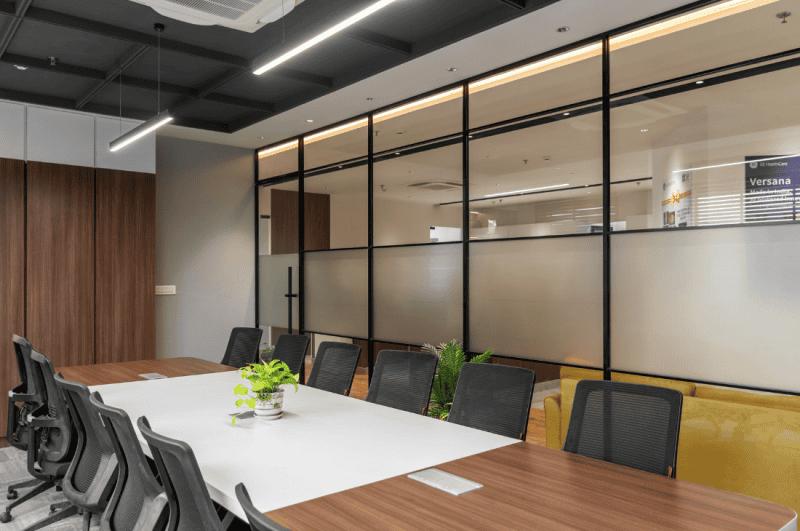
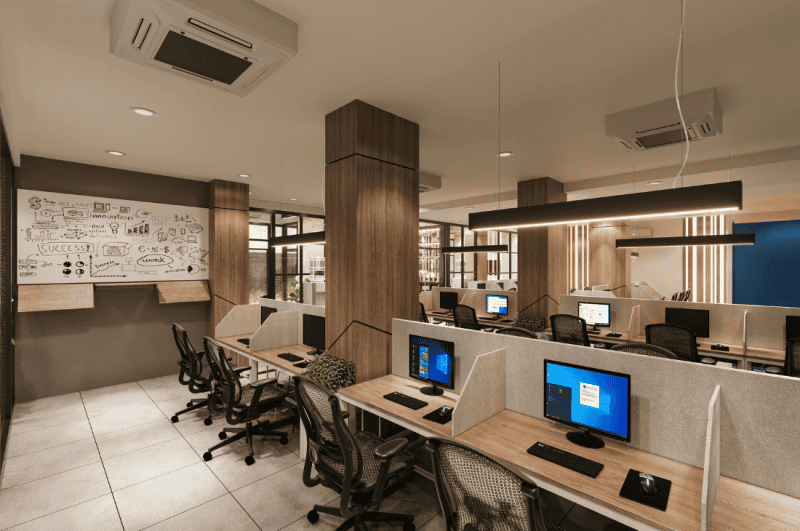
Rather than replicating a traditional headquarters on a smaller scale, a hub might prioritise collaborative spaces, meeting rooms, quiet work areas, video conferencing facilities and informal break spaces. In other words – the useful stuff.
The Untapped Potential of Existing Space
One of the most interesting aspects of the satellite-office model is that a new workplace doesn’t necessarily require a new commercial property. Organisations often already have underused land or space that could be put to work.
Think car parks, unused sections of operational sites, surplus land around existing facilities or space that has become redundant as the organisation’s physical footprint has changed. A modular office can be installed on any of this suitable land to create a professional workplace – no need to embark on a traditional construction project.
That opens up some really interesting possibilities.
A logistics company could create a regional office alongside an operational site. A national organisation could establish a small employee hub closer to a cluster of staff. A manufacturer could provide dedicated office accommodation without taking valuable production space away from its main facility. The workplace doesn’t necessarily need to move. It can come to the workforce.
Why Modular Offices Fit the Hub Model
Satellite offices need to be flexible because the organisations using them are flexible. You may not know exactly how many people will use a hub five years from now, and there’s little sense in committing to a building that assumes you do.
Modular offices can be designed around the required footprint and then adapted as circumstances change. You can add modules when and where you need more space, and configure internal layouts around different working requirements.
Need private meeting rooms? Build them in.
Need open collaborative space? Design around it.
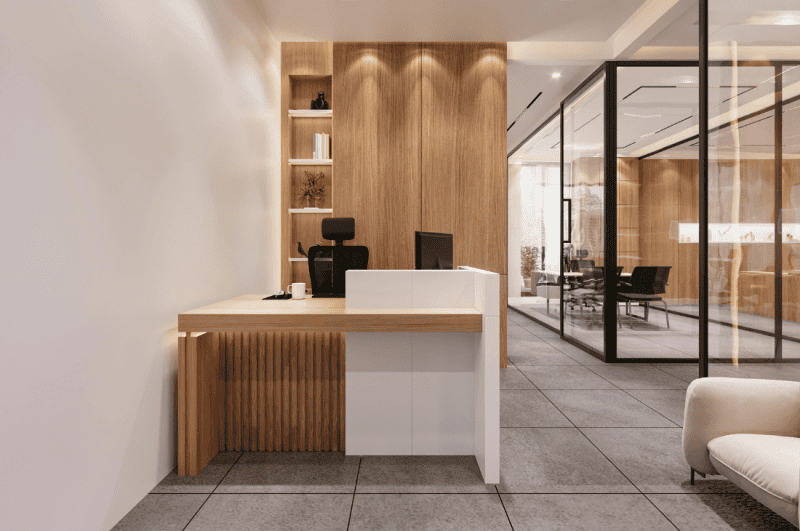
Need reception facilities, kitchen areas, accessible facilities or dedicated technology infrastructure? These can all form part of the specification.
It’s not about putting desks inside a portable building and calling it an office. A well-designed modular office can be a genuine workplace environment, designed around the organisation and the people using it.
Professional Doesn’t Have to Mean Permanent
There’s also a perception issue worth addressing. For some organisations, the phrase “temporary office” still conjures up images of basic site cabins. Modern modular offices are a very different proposition, whether they’re installed as permanent structures or temporary.
They can be bright, comfortable and professionally finished, with insulation, heating and cooling, integrated electrical systems, IT infrastructure, meeting rooms, kitchens and welfare facilities.
The exterior can also be designed to complement an existing site, while internal finishes, furniture and branding can create a workplace that feels unmistakably part of the organisation.
All of this matters. Employees shouldn’t feel as though they’ve been sent to the “temporary building”. They should feel that they’ve been given a workplace designed to help them do their jobs.
A Better Use of Corporate Real Estate
For Operations Directors, satellite hubs also create an opportunity to rethink property strategy.
A large central office can be expensive to maintain even when much of it sits empty for several days a week. At the same time, employees may be spending hours commuting to access facilities that could be provided much closer to home.
A distributed workplace model allows organisations to think about their estate in terms of function rather than simply floor area.
The headquarters can become a destination for collaboration, culture and larger gatherings, while local hubs handle everyday working, smaller meetings and regional operations. That can create a much more purposeful relationship between people and physical space.
The Hub Can Be Smaller – But It Can’t Be an Afterthought
Of course, all of this doesn’t mean that modular offices will automatically be better every time. A poorly planned satellite office can simply create another workplace that nobody wants to use.
Successful hubs need to understand what employees actually need from them. That means considering:
- Location: Is it genuinely easier for the target workforce to reach?
- Capacity: How many people are likely to use it on a typical day?
- Layout: Does it support both focused work and collaboration?
- Technology: Can employees work seamlessly with colleagues elsewhere?
- Facilities: Are there suitable meeting, kitchen, WC and welfare provisions?
- Identity: Does it feel like part of the organisation?
- Flexibility: Can the space change as workforce patterns change?
The physical environment still matters. In fact, when employees have more choice over where they work, the office has to earn the journey.
Building a Workplace People Choose to Use
This may ultimately be the biggest opportunity presented by the satellite-office model. The future of work isn’t necessarily about getting everyone back into one building. Nor is it necessarily about everyone working remotely.
It’s about giving people the right place for the right type of work. Sometimes that place will be home, sometimes headquarters, and sometimes it’ll be a local hub ten minutes from where they live.
Modular offices make that third option considerably easier to deliver. Because they’re manufactured off-site, installed relatively quickly and designed specifically around their intended use, they allow organisations to respond to workplace requirements without committing to lengthy traditional construction programmes.
They can also be relocated or repurposed if those requirements change, making them particularly well suited to a workplace strategy that is expected to evolve.
The Headquarters Isn’t Dead, It’s Just Getting Company
The rise of satellite offices doesn’t necessarily spell out the end of the headquarters. Instead, it could mark the end of the idea that one space has to do and be everything.
A central headquarters can remain an important part of company identity and culture while smaller, strategically positioned hubs provide something it can’t: convenient, accessible professional workspace closer to employees.
For organisations managing a distributed workforce, that’s a pretty powerful combination. And with modular construction, creating that network doesn’t necessarily require years of planning, a new property portfolio or a major construction programme.
Build Your Workplace Around Your People
PF Modular designs and delivers bespoke modular office buildings for organisations that need high-quality workspace without the constraints of traditional construction. From compact satellite hubs to larger multi-unit office developments, our bespoke modular solutions can be configured around your workforce, site and operational requirements.
If your organisation is rethinking its workplace strategy, PF Modular can help you explore what a localised, flexible office network could look like – and how quickly you could put it into place. Give us a call at 01420 587880 to find out more!
Related Posts
16.09.2026• Modular Buildings
Traditional vs. Modular: A Cost-Benefit Analysis for Growing SMEs
For a growing SME, needing more space is usually a good problem to have. More employees, new contracts, additional equipment or an expanding operation...
Continue Reading
12.08.2026• Modular Buildings, Posts & News
SEN-Friendly Design: Creating Inclusive Learning Spaces in Modular Classrooms
When discussing SEND provision, the conversation tends to revolve around staffing, funding, interventions and curriculum. The building itself is rarely even on the docket....
Continue Reading
15.07.2026• Modular Buildings
The ‘Pop-Up’ Marketing Suite: Creating a High-End Sales Experience on a Construction Site
There’s a strange challenge at the heart of every property development: You need people to buy into the vision long before the vision actually...
Continue Reading