07.07.2026• Posts & News
The Future of UK Construction: What Europe’s Modular Boom Means for Schools, Healthcare and Developers

According to a recent market report, the European modular construction industry was already worth around £25 billion in 2025, and is projected to climb to £32.6 billion by 2030. That represents an annual growth of 5.39%, while the larger construction industry is currently growing at 4.7% CAGR.
That might sound like just another predictable market trend, but it actually points to something a whole lot cooler: a structural change in the delivery of buildings across the UK and Europe.
For many decades, construction has relied on the same model. Labour-intensive, weather-dependent projects delivered on-site over long periods, vulnerable to delays, rising costs and inconsistent quality. And right now, the construction industry is responsible for 62% of the UK’s waste. This statistic is painful, especially as the EU averages at just over a third (not almost two-thirds like the UK).
Also, the UK completed around 208,600 homes in 2024-25 against a target of 300,000. Construction labour shortages continue to intensify, with around 40% of firms reporting labour issues. At the same time, sustainability regulations are tightening rapidly, particularly in the UK with its 2050 Net Zero goal.
Meanwhile, governments are trying to solve urgent space challenges in housing, healthcare and education.
Why Modular Construction is Growing So Quickly
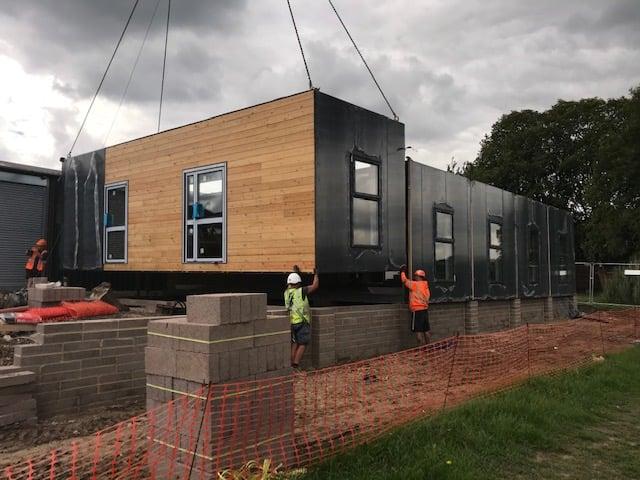
Remember those temporary prefabricated little buildings that schools and construction sites used to have carted in when extra space was needed? That’s not what modular construction is any more.
These days, modular construction means precision-engineered buildings manufactured in controlled factory environments, which are transported and assembled on-site. While there’s a lot to this (which we’ll explore in full below), the appeal becomes obvious when you look at the economics alone.
According to extremely in-depth research done by Markets and Markets, permanent modular construction can:
- Reduce on-site waste by up to 90%
- Accelerate project delivery by up to 50%
- Reduce disruption on occupied sites
- Improve quality control through factory manufacturing
- Lower exposure to weather delays
- Reduce dependence on scarce on-site labour
This is particularly important because the construction industry (in the UK and most of Europe) is now dealing with multiple challenges simultaneously.
Labour shortages are slowing delivery timelines, material prices remain volatile, and ESG reporting requirements are becoming stricter. At the same time, public sector budgets are under pressure, and developers are being pushed to deliver more energy-efficient and future-ready buildings.
At the same time, demand is not slowing.
According to the European Commission, roughly 75% of Europe’s building stock will need to be renovated or replaced to meet 2030 energy requirements. Is that possible using traditional construction methods alone? No, which is why modular is being more widely adopted, and even encouraged.
The UK Government Has Been Preparing for This Shift for Years
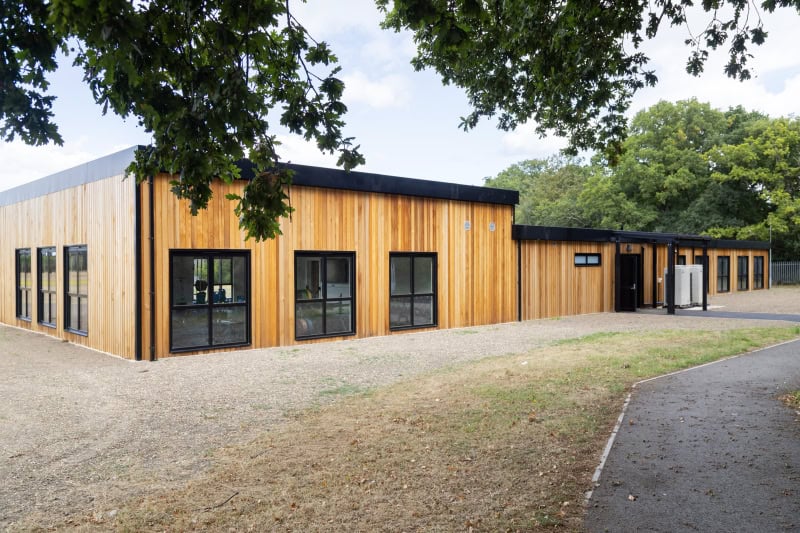
This transition is not coming out of the blue for those in the know.
Back in the UK Government’s Construction 2025 industrial strategy, published in July of 2013, there was already clear recognition that construction needed to modernise. The strategy called for lower emissions, faster delivery, improved exports and reduced whole-life costs. Those ambitions, which, of course, weren’t achieved by 2025, align perfectly with modular construction.
Public funding programmes have reinforced the move to more sustainable, efficient building practices. The UK Affordable Homes Programme, the EU Recovery and Resilience Facility and others have put nearly 580 billion pounds into sustainable infrastructure and building modernisation.
So, we think that the most interesting question is not whether modular will grow – it’s where modular will have the biggest impact.
Schools Could Become One of Modular’s Biggest Success Stories
Schools face a tricky balancing act. When they need more capacity, they need it quickly, but they can’t compromise on safety, sustainability, flexibility or even cost.
Traditional construction tends to be really disruptive in educational environments. Long build programmes, noisy work and unpredictable timelines can all take a toll on students, staff, and the actual work of a school (educating the kids).
Modular works differently.
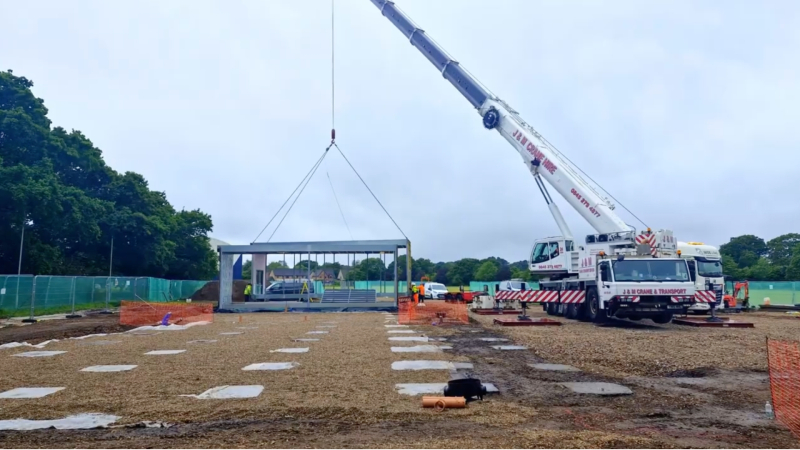
Since most of the construction process happens off-site, disruption becomes minimal, and delivery timelines are sped up. New classrooms, sports facilities, dining halls and specialist teaching spaces can all be built onto a school to match its aesthetic and specific needs, without the hullabaloo of traditional construction.
The speed alone matters more than ever.
While the UK has a falling birth rate and intake isn’t consistently rising, there is a lot of pressure on SEND school needs and facilities. We’ve written a dedicated blog on the topic, so we won’t get into it now, but we will note that, aside from the clustered SEND strain, many of the current school buildings are ageing poorly and becoming expensive to maintain, which is a problem for the overall education system.
Healthcare Has Similar Pressures, But Even Less Time
If schools need speed, healthcare needs urgency.
We’d like to say that the NHS has “undergone some hard years”, particularly since the Covid pandemic ripped through our healthcare systems and made all the existing holes larger and more noticeable. But the statement that seems closer to the truth is: The NHS is crumbling.
The Royal College of Surgeons have said that the system is under severe strain and called for more money for new operating theatres in the autumn budget. Meanwhile, the independent Darzi review revealed billions of pounds worth of unmet maintenance needs and the shocking state of NHS buildings.
Lord Dhazi, in an opening letter to the Secretary of State for Health & Social Care, said that “the National Health Service is in serious trouble” and noted that public satisfaction in the NHS is now at its lowest ever.
Furthermore, in January 2025, it was revealed that the New Hospital Programme, which was announced by Boris Johnson’s government in 2020, would not be completed by 2030 as planned, but rather a decade later. The programme, which aimed to deliver 40 new, refurbished or extended hospitals, was actually unfunded beyond 2025.
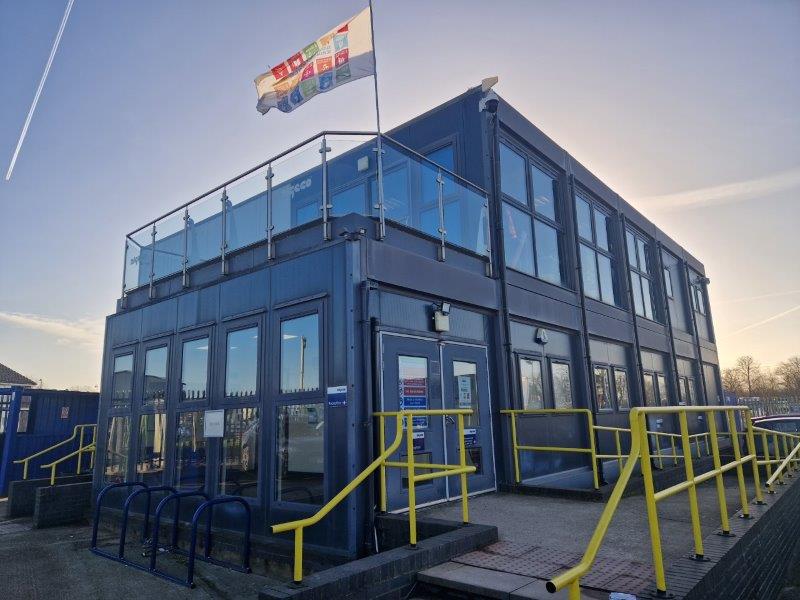
So, it’s clear to see why modular healthcare buildings have become so attractive. Hospitals and healthcare providers can use modular construction to deliver:
- Additional ward space
- Diagnostic centres
- Operating theatres
- GP surgeries
- Mental health facilities
- Temporary decant facilities during refurbishment works
Healthcare environments also require consistency, compliance and quality assurance, which factory-controlled manufacturing environments can support with high levels of precision and tighter tolerances.
Then there’s the sustainability aspect.
The UK is aiming for Net Zero by 2050, and healthcare buildings are very energy-intensive assets. So, as sustainability requirements tighten and operational costs rise, providers are under growing pressure to improve energy performance while they modernise ageing infrastructure.
In many ways, healthcare demonstrates the wider shift happening across construction: organisations can’t just ask how cheaply a building can be delivered. They need to ask how intelligently it can be delivered, too.
Developers Are Rethinking Risk
For developers, construction is increasingly a question of risk management in a market where every major variable has become harder to control or predict.
Traditional construction exposes developers to a familiar but increasingly volatile mix of risks: labour shortages, weather delays, programme overruns, material inflation, supply chain disruption, ESG compliance pressures, and financing exposure tied to long build cycles. Each one of these factors alone can impact project viability. Together, they create compounding uncertainty that can make development genuinely volatile.
Modular construction doesn’t make all these risks null and void, but it does redistribute and reduce many of them in meaningful ways.
By shifting a large proportion of the build process into factory environments, developers gain greater control over time, cost and quality. Manufacturing conditions are more predictable than on-site conditions, which means fewer variables that might affect production schedules. That predictability then carries through into site assembly, where installation can be completed in a fraction of the time of traditional builds.
Speed is one of the most commercially significant advantages. Modular methods can deliver projects in 30-50% less time than traditional methods. This faster delivery translates directly into earlier occupancy, earlier revenue generation, and reduced exposure to interest rate fluctuations during construction. In sectors such as build-to-rent, student accommodation and hospitality, even small improvements in programme length can materially affect returns.
There is also a growing financing dimension to this shift. Lenders and institutional investors are increasingly focused on delivery certainty and ESG performance. Modular projects, with their shorter timelines and reduced on-site risk, can present a more predictable development profile, which is becoming more attractive in tighter capital markets.
Risk reduction also extends into cost control. While modular can’t be assumed to be automatically cheaper in every case, it can certainly reduce the likelihood of cost escalation caused by delays, rework or supply chain volatility. In an environment where inflation in construction materials has been unpredictable, that stability is becoming strategically important.
Sustainability expectations are another key driver. Developers are under increasing pressure to demonstrate lower embodied carbon, reduced waste and improved operational efficiency across asset lifecycles. Permanent modular construction can reduce on-site waste by up to 90%, and its controlled manufacturing processes also use materials more efficiently. This aligns directly with tightening ESG requirements across both public and private investment markets.
All in all, these factors are reshaping how developers assess project feasibility. The question is shifting away from purely upfront cost per square metre, and toward a broader assessment of delivery certainty, lifecycle performance and risk-adjusted return.
With all the available context, it’s clear that modular construction is becoming less of an alternative delivery method and more of a strategic tool for de-risking development pipelines.
Related Posts
16.09.2026• Modular Buildings
Traditional vs. Modular: A Cost-Benefit Analysis for Growing SMEs
For a growing SME, needing more space is usually a good problem to have. More employees, new contracts, additional equipment or an expanding operation...
Continue Reading
09.09.2026• Modular Buildings
The Hybrid Hub: Why Satellite Offices Are Replacing the Central Headquarters
The word “headquarters” signifies the unquestioned centre of business. Employees travel to it, teams are organised around it, and workspace strategy largely involves deciding...
Continue Reading
12.08.2026• Modular Buildings, Posts & News
SEN-Friendly Design: Creating Inclusive Learning Spaces in Modular Classrooms
When discussing SEND provision, the conversation tends to revolve around staffing, funding, interventions and curriculum. The building itself is rarely even on the docket....
Continue Reading