08.12.2025• Modular Buildings
The Hidden Quality Advantage: Why Modular-Built Classrooms Outperform Traditional Construction
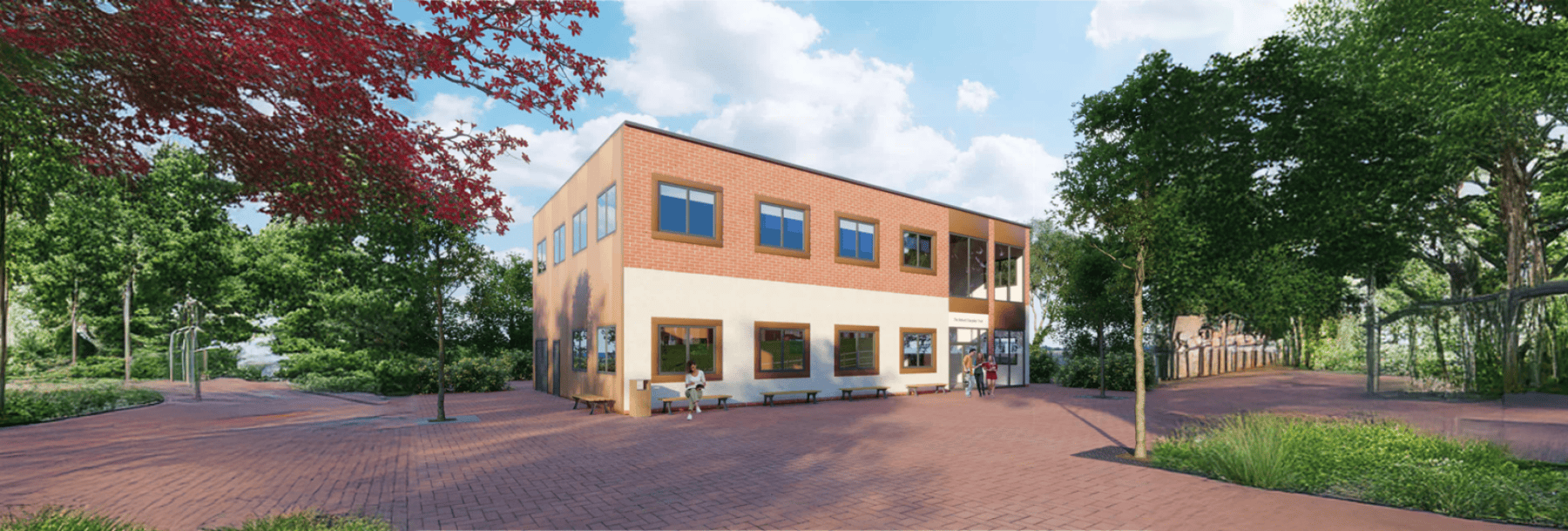
When most school leaders think about adding classroom capacity, they picture building sites: muddy groundwork, weather delays, and the unpredictability that comes with traditional construction. But a growing number of educational institutions are discovering a counterintuitive truth—the best way to build a school isn’t on a school site at all.
Recent government research into volumetric modular construction has revealed what progressive educators already suspected: modular-built classrooms don’t just arrive faster than traditional buildings. They arrive better.
The Quality Control Revolution Hiding in Plain Sight
With over 700 companies now operating in the UK’s modular construction sector and employing over 25,000 people, according to The Data City’s latest industry snapshot, this is no longer an experimental approach. It’s a mature industry with sophisticated quality assurance processes that would be impossible to replicate on a traditional building site.
The difference starts with a fundamental shift in environment. While traditional construction battles British weather—rain-soaked materials, wind delays, frozen ground conditions—modular classrooms are manufactured in climate-controlled factory settings where temperature, humidity, and working conditions remain constant.
Government research conducted by the Department for Levelling Up, Housing and Communities emphasises that:
“factory manufacturing processes for volumetric construction are predominantly underpinned by comprehensive quality assurance, testing, and inspection procedures.”
This means potential defects can be identified and corrected before modules ever leave the factory—not discovered months later when students are already in the building.
Why ‘Modular’ Beats Building Sites for Educational Spaces
Traditional construction sites operate with inherent limitations. Inspections happen intermittently. Materials sit exposed to elements. Tradespeople work in conditions that vary dramatically day to day. Quality depends heavily on individual craftspeople working in challenging environments.
Modular production flips this equation entirely. Every electrical fitting, window seal, and insulation layer undergoes inspection under controlled conditions. Manufacturing processes follow standardised procedures with built-in checkpoints. This level of precision often relies on components produced through custom stainless steel fabrication Sydney, ensuring consistency and long-term durability across modular builds. When issues arise, they’re analysed at source, corrections implemented immediately, and improvements cascade across all subsequent units.
The government research highlights a critical advantage:
“This means that any defects or issues can be readily identified and corrected before modules are transported to site. Analysis of the issue at source can prevent it from recurring, enabling a culture of continuous improvement.”
For schools, this translates to classrooms arriving with consistent quality across every unit. No variation between the first classroom delivered and the twentieth. No weather-related compromises. No “we’ll fix that later” promises that become ongoing maintenance headaches.
The Timeline Advantage That Doesn’t Sacrifice Quality
School leaders operating on academic-year schedules understand urgency. When enrollment surges or facilities reach capacity, waiting 18 months for traditional construction isn’t just inconvenient—it means turning away local families or teaching in overcrowded conditions that compromise educational outcomes.
Modular construction can typically deliver fully operational classrooms in 12-16 weeks from design freeze to completion. But here’s what matters: this speed doesn’t come at quality’s expense. It comes from parallel processing.
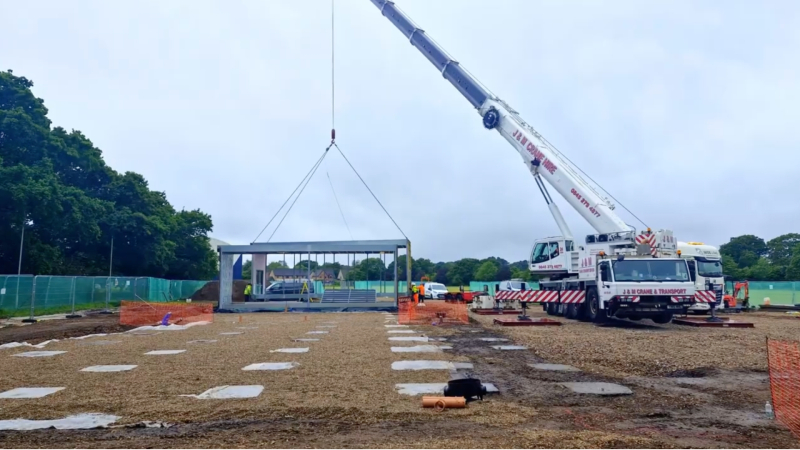
While groundwork proceeds on site, classrooms are simultaneously being manufactured in factories. Electrical systems, plumbing, interior finishes—work that would happen sequentially on a traditional site—occurs concurrently in controlled factory bays. The result is compressed timelines with enhanced, not diminished, quality control.
Protection From Start to Finish
One advantage rarely discussed is how factory-built modules are protected throughout their journey. From manufacture to installation, properly managed modular construction maintains building integrity in ways traditional construction cannot match.
Government research notes that modular environments “protect modules from exposure to weather during fabrication,” but adds a crucial caveat: “this must continue through transportation and while stored onsite, until fully installed.” Quality-focused manufacturers have comprehensive protocols for protecting modules during transit and site storage, including weather-resistant packaging and moisture monitoring.
Compare this to traditional construction, where framing sits exposed for weeks, insulation absorbs moisture, and materials degrade before the building is even enclosed.
The Expertise Concentration
Traditional construction spreads expertise thin across multiple sites. A skilled tradesperson might work on several projects simultaneously, traveling between locations, working in varying conditions with different material specifications.
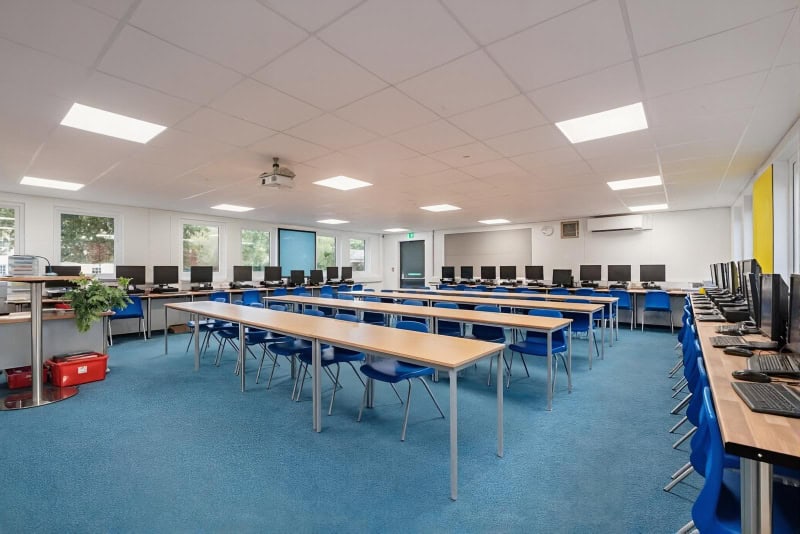
Modular manufacturing concentrates expertise. Specialised teams work with the same systems day after day, developing deep familiarity with specific products and assembly techniques. This repetition doesn’t create monotony—it creates mastery. When your team manufactures educational spaces as their primary focus, they understand acoustic requirements, lighting needs, and durability standards specific to learning environments.
Companies like PF Modular exemplify this focused approach, developing deep expertise in educational buildings rather than trying to be generalists across all construction types.
Data-Driven Continuous Improvement
Perhaps the most significant quality advantage is invisible to most school purchasers: the feedback loop inherent in modular production.
Traditional construction operates project by project. Lessons learned on one school build may or may not transfer to the next. Different contractors, different sites, different challenges. Knowledge disperses rather than accumulates.
Modular production creates data. Every module produced generates quality metrics. Tolerances are measured precisely. Assembly times are tracked. Issues are documented systematically. This data feeds continuous improvement processes that make each production run better than the last.
The government research emphasises this as a key differentiator, noting that factory quality assurance enables “a culture of continuous improvement” impossible to replicate in traditional site-based construction.
The Testing Advantage
Product and component testing in modular construction occurs under controlled conditions before installation. Fire performance, structural integrity, thermal efficiency—all verified in laboratory settings where variables can be controlled and results replicated reliably.
Traditional construction relies heavily on post-installation testing and inspection, often in conditions that make comprehensive testing difficult. Access limitations, weather constraints, and schedule pressures can compromise thorough quality verification.
While the government research does identify areas where testing methodologies continue to evolve—particularly around specific modular connections and system-level performance—the trajectory is clear: testing regimes for modular construction are becoming increasingly sophisticated and rigorous.
Real-World Performance in Educational Settings
The proof isn’t just in controlled factory conditions—it’s in how these buildings perform for schools and students over time.
Educational institutions using modular classrooms report consistent internal temperatures, better acoustic performance, and fewer maintenance issues compared to aging traditional buildings. The precision manufacturing that skeptics worry about actually delivers superior performance: tighter building envelopes mean better energy efficiency, precisely installed windows eliminate drafts, and quality-controlled finishes stand up to the demanding use patterns schools require.
The Maturity of the Industry
With 771 active companies in the UK modular construction sector, this is no longer a niche market. The industry has reached critical mass, bringing with it the standardisation, competition, and quality benchmarks that drive excellence in any mature market.
The Data City’s analysis shows this isn’t a flash-in-the-pan trend. The sector demonstrates stable growth, consistent employment, and increasing investment—all indicators of an industry that’s proven its value proposition and continues to refine its offering.
For schools, this maturity means choice. Multiple suppliers with established track records. Competitive pricing driven by quality rather than just cost-cutting. Innovation focused on genuine performance improvements rather than gimmicks.
Addressing the Perception Gap
Despite these advantages, many school leaders still harbor reservations about modular construction, often based on outdated perceptions of “temporary” buildings from decades past. Modern modular classrooms bear no resemblance to those drafty portables.
The government research acknowledges this perception challenge while validating the quality reality:
“A notable advantage of volumetric construction is that modular manufacturing processes are predominantly underpinned by comprehensive quality assurance, testing, and inspection procedures.”
The buildings arriving on school sites today are permanent, high-performance structures that will serve students for 60+ years—the same design life as traditional construction, but with quality control advantages traditional methods simply cannot match.
Getting It Right: What Schools Should Demand
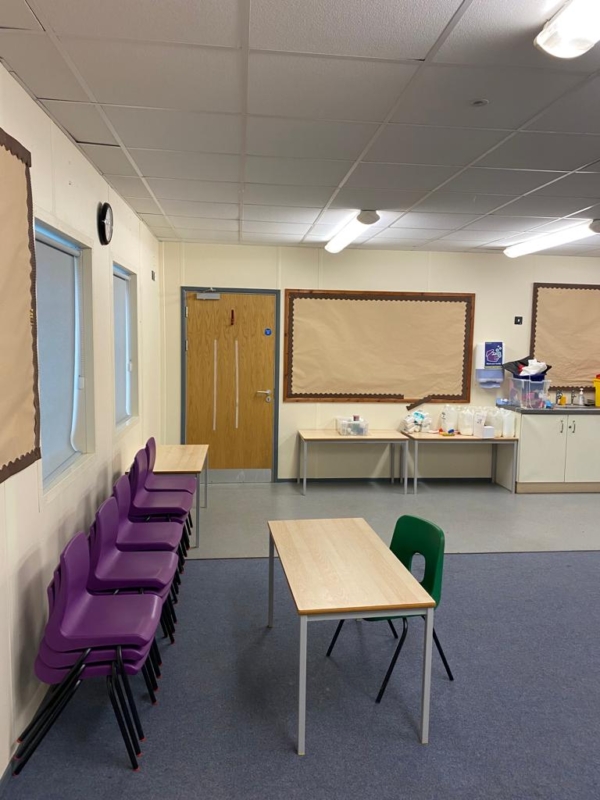
Quality advantages aren’t automatic—they require schools to work with the right partners and follow best practices. The government research is clear that success requires:
Early decision-making: Committing to modular construction at the project’s outset, not as an afterthought when traditional timelines prove unworkable.
Design freeze discipline: Understanding that modular construction requires finalising designs earlier than traditional projects, but this discipline actually improves outcomes by forcing thorough upfront planning.
Experienced partners: Selecting manufacturers with proven educational sector experience and comprehensive quality assurance systems.
Clear processes: Establishing defined responsibilities and quality checkpoints from design through installation.
Schools that follow these principles consistently report excellent outcomes. Those that treat modular as a rushed alternative to proper planning may miss the quality advantages entirely.
The Environmental Quality Bonus
Beyond building performance, modular construction delivers environmental benefits that increasingly matter to schools, parents, and communities.
Precise material ordering in factory settings dramatically reduces waste compared to traditional construction sites. The Data City’s research notes sustainability as a key driver for sector growth, and manufacturers report waste reduction of 50% or more compared to site-based building.
For schools working toward carbon reduction goals, modular construction offers a pathway to lower embodied carbon and improved operational efficiency—quality outcomes that extend beyond the building itself to institutional values and community impact.
Looking Forward: An Industry Investing in Excellence
The modular construction sector isn’t resting on current quality advantages. Investment in the sector continues to grow, according to The Data City’s analysis, funding research into advanced manufacturing techniques, improved testing methodologies, and innovative materials.
The government research identifies areas where standards and testing continue to evolve, particularly around connections between modules and fire safety validation. Rather than weaknesses, these represent areas of active improvement—an industry committed to transparent assessment and continuous enhancement.
For schools, this means the quality advantages of modular construction will only increase over time as manufacturing processes become more sophisticated, testing more comprehensive, and industry standards more rigorous.
The Smart Choice for Quality-Focused Schools
Schools face unprecedented pressure to expand capacity quickly while maintaining—or improving—the quality of learning environments. Traditional construction increasingly struggles to meet both demands simultaneously.
Modular-built classrooms solve this apparent contradiction by fundamentally changing where and how quality is built into educational spaces. Climate-controlled manufacturing, systematic quality assurance, concentrated expertise, and data-driven improvement deliver buildings that don’t just arrive faster—they arrive better.
With a mature industry of 771 companies and 25,000 workers behind them, and government research validating their quality advantages, modular classrooms have moved from alternative solution to smart default for schools that refuse to compromise on either speed or quality.
The question for school leaders isn’t whether modular construction can deliver quality educational spaces. Government research and industry maturity confirm it can. The question is whether schools can afford to keep building the old way when a better approach is available.
Related Posts
16.09.2026• Modular Buildings
Traditional vs. Modular: A Cost-Benefit Analysis for Growing SMEs
For a growing SME, needing more space is usually a good problem to have. More employees, new contracts, additional equipment or an expanding operation...
Continue Reading
09.09.2026• Modular Buildings
The Hybrid Hub: Why Satellite Offices Are Replacing the Central Headquarters
The word “headquarters” signifies the unquestioned centre of business. Employees travel to it, teams are organised around it, and workspace strategy largely involves deciding...
Continue Reading
12.08.2026• Modular Buildings, Posts & News
SEN-Friendly Design: Creating Inclusive Learning Spaces in Modular Classrooms
When discussing SEND provision, the conversation tends to revolve around staffing, funding, interventions and curriculum. The building itself is rarely even on the docket....
Continue Reading