10.02.2026• Modular Buildings
Benefits of Portable Buildings for Businesses

Today’s business environment is fast-moving towards the point of breakneck speed, and in order to keep up, organisations need to be agile, efficient and always ready for change.
Whether scaling up teams, relocating sites, supporting temporary projects or launching a new operation. Traditional construction is often slow, costly and disruptive — rarely ideal when continuity and speed are critical.
Portable buildings, often referred to as portable cabins, are high-quality, purpose-built spaces, and their benefits go far beyond simple cost savings – hence their popularity as a strategic choice for organisations across sectors.
Let’s explore the key commercial advantages that make portable buildings the right choice for forward-thinking, future-ready organisations.
1. Speed of Delivery: Space When You Need It
When space is needed quickly, portable buildings immediately stand apart. Because cabins are manufactured off-site while groundwork happens in parallel, installation can take just weeks rather than months.
That speed matters in practical ways. It means new teams can be housed quickly and happily, projects can move forward on schedule, and temporary relocations don’t become long-term disruptions. Instead of waiting for a build to finish, organisations can stay operational and responsive.
Just as importantly, fast delivery reduces the hidden costs that come with extended programmes, from temporary accommodation and lost productivity because of prolonged site disruption.
2. Cost-Effective Without Compromising Quality
Lower cost doesn’t have to mean lower standards. Modern modular buildings are designed with permanence in mind, with robust structures, high-performance insulation, fully integrated services and bright, comfortable interiors.
Since they’re built in controlled factory conditions, modular units also manage to avoid many of the risks that push traditional projects over budget, like weather delays, labour shortages and unexpected site issues. As a result, you get predictable budgets, faster programme certainty, and a lower total cost of ownership.
For organisations managing tight capital budgets, this predictability is just as valuable as the initial cost savings, delivering stronger value for money across the life of the building.
3. Flexibility to Adapt with Your Organisation
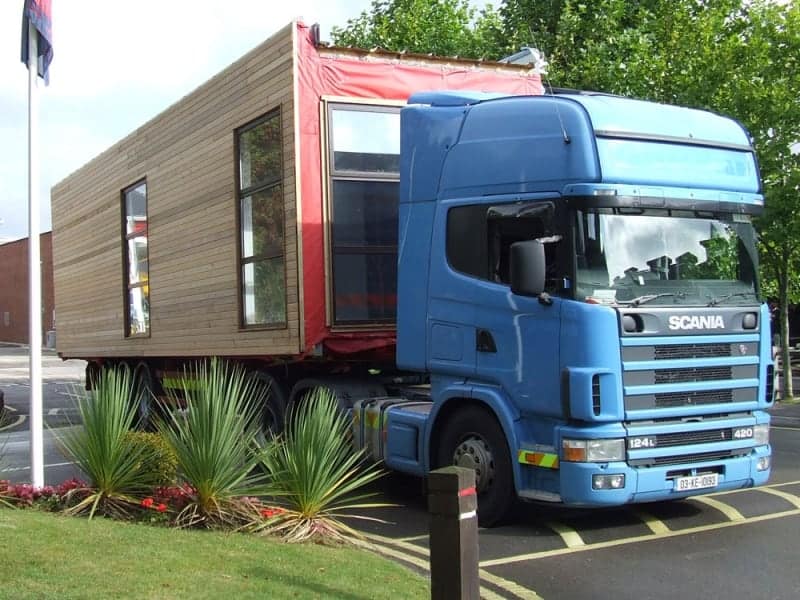
If the last decade has taught organisations anything, it’s that physical space must be adaptable. Very few organisations can predict exactly what their space needs will look like five years from now. Hybrid working, shifting team sizes and evolving operational priorities all demand flexibility – and modular offices are built around that reality.
Layouts can be reconfigured, additional units added, or buildings relocated altogether as requirements change. Spaces can move from open-plan offices to meeting rooms, project hubs or client-facing environments without starting from scratch.
This adaptability allows organisations to make great decisions that support change, rather than restrict it.
4. Minimal Disruption, Maximum Continuity
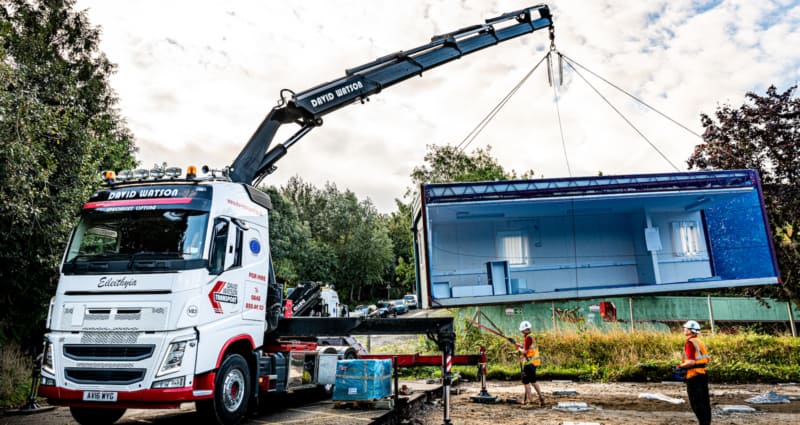
Traditional construction often comes with noise, dust, extensions and a whole lot of interruptions to normal office operations. Modular units, however, are pre-built off-site, meaning on-site installation is quick and minimally disruptive.
For workplaces that need to stay operational throughout an expansion or refurbishment, this difference is huge. Staff can continue working uninterrupted, close neighbours aren’t affected, and project timelines stay on track.
5. High Quality and Comfortable Work Environments
The quality of a workspace has a direct impact on how people work within it. PF Modular’s portable cabins are designed to support productivity, collaboration and wellbeing, not just provide desks and walls.
Natural light, comfortable temperature control, good acoustics and well-planned layouts all contribute to a space that people want to work in. Integrated IT and AV infrastructure ensures teams can plug in and get to work immediately.
These are not temporary cabins in the old sense – they are modern, professional environments designed for long-term use.
6. Sustainability and Environmental Efficiency
Modular construction leads the way in responsible building, not just on paper but in practice. Because units are manufactured in controlled environments, material waste is significantly reduced compared to traditional construction. Precision engineering and manufacturing also improve energy efficiency and minimise on-site disruption.
Our portable modular units combine excellent thermal performance with long-lasting finishes, reducing energy consumption during occupation. For organisations with sustainability targets, whether net-zero goals or broader environmental commitments, temporary modular units strike the right balance between environmental responsibility and commercial realism.
7. Scalable for Future Growth
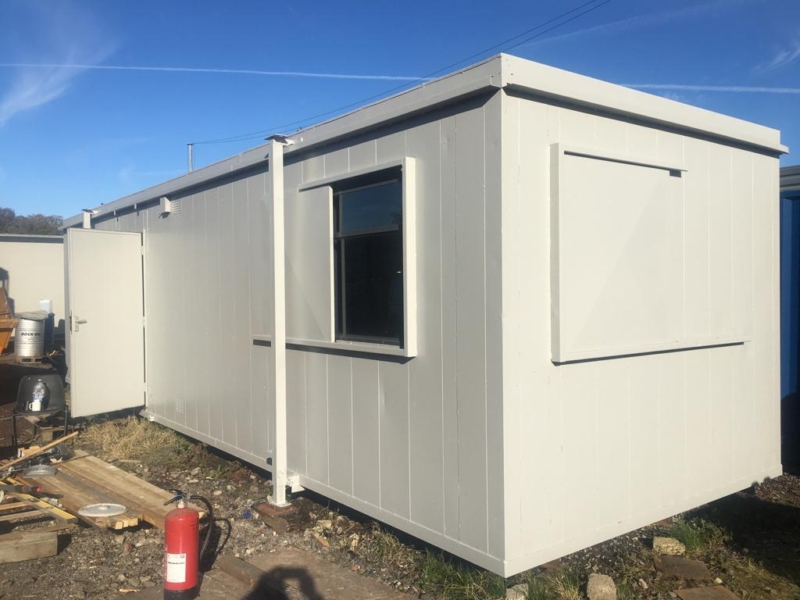
Whether you’re adding a small office extension or delivering multiple buildings across different sites, modular buildings scale efficiently. Repeatable designs reduce cost and complexity, while consistent quality makes it easier to roll out space across even a widely spread organisation.
For multi-site operators, councils, education trusts and growing businesses, this scalability turns portable modular units into a long-term estate strategy rather than a short-term fix.
8. Custom Layouts and Bespoke Features
No two organisations operate exactly the same, and modular buildings don’t need to be generic. Layouts can be tailored to include meeting rooms, quiet spaces, breakout areas, reception zones and welfare facilities – all aligned with how your teams actually work.
Branding, finishes and exterior design can also be incorporated, ensuring the building feels like a natural extension of your organisation rather than an afterthought.
9. Easy Integration of Technology
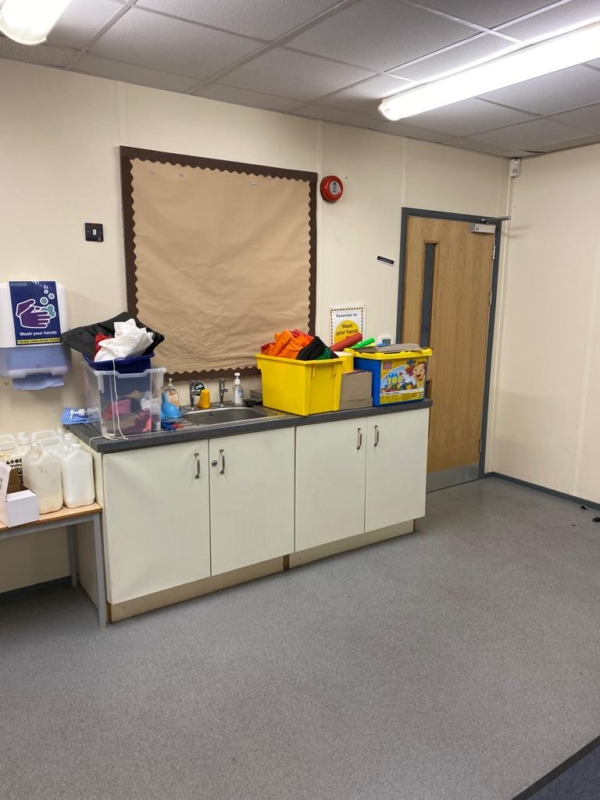
Modern offices rely on technology, which modular buildings are designed with power, data and connectivity are integrated from the outset, supporting everything from secure networks and video conferencing to smart building systems.
By building technology into the design, organisations can avoid disruptive retrofits while making sure their workspace is ready for how people work today and tomorrow.
10. Built to Be Used Again
One of the most overlooked advantages of modular offices is reusability. When a building is no longer needed in one location, it can be relocated, reconfigured or repurposed elsewhere.
This extends the building’s lifespan and improves return on investment, making modular offices a genuinely sustainable asset rather than a single-use solution.
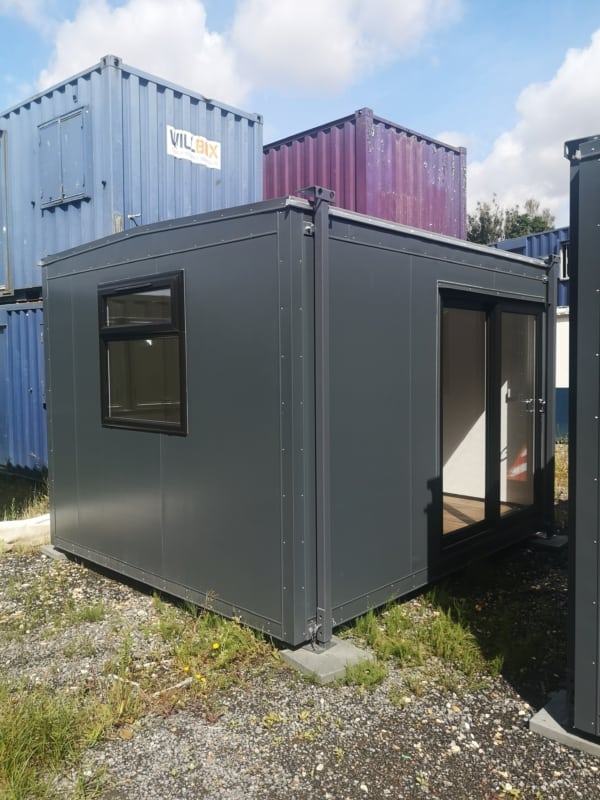
11. True Portability: Move the Building, Not the Problem
One of the defining advantages of portable buildings is right there in the name: they’re designed to move. When operational needs change, projects end, or sites relocate, the building can move with you.
Portable cabins are designed to be relocated, reconfigured or repurposed and can be dismantled, transported and reinstalled on a new site with minimal disruption. Brilliant if you want to avoid the cost and waste of starting again. This makes them particularly valuable for organisations managing temporary sites, phased developments or evolving estates.
Instead of being tied to a single location, your investment remains flexible, supporting changing requirements over time and delivering far greater long-term value than fixed construction ever could.
Modular Units Offering Smart Space for Smarter Organisations
The world of work is changing, and the organisations that are going to thrive are the ones that treat their space strategy as part of their operational strategy. Portable units are not a compromise – they are a practical, high-performance solution that combines speed, quality, adaptability and sustainability
Whether you need short-term capacity, long-term space, or the flexibility to evolve as your organisation does, moveable modular units deliver a whole lot of value – today and far into the future.
If you’re considering workspace expansion, refurbishment support or hybrid working solutions, PF Modular’s specialists can help design a modular unit that matches your organisational goals and operational needs. Just give us a call at 01420 587 880, and our friendly team will be happy to help.
Related Posts
16.09.2026• Modular Buildings
Traditional vs. Modular: A Cost-Benefit Analysis for Growing SMEs
For a growing SME, needing more space is usually a good problem to have. More employees, new contracts, additional equipment or an expanding operation...
Continue Reading
09.09.2026• Modular Buildings
The Hybrid Hub: Why Satellite Offices Are Replacing the Central Headquarters
The word “headquarters” signifies the unquestioned centre of business. Employees travel to it, teams are organised around it, and workspace strategy largely involves deciding...
Continue Reading
12.08.2026• Modular Buildings, Posts & News
SEN-Friendly Design: Creating Inclusive Learning Spaces in Modular Classrooms
When discussing SEND provision, the conversation tends to revolve around staffing, funding, interventions and curriculum. The building itself is rarely even on the docket....
Continue Reading