20.01.2026• Modular Buildings
Budget-Friendly School Expansion Strategies for 2026

For school leaders and estates teams in the UK, decisions over expansions are trickier than ever. With limited capital funding, rising expectations around inclusion, and increasing scrutiny over value for money, every square metre needs to earn its place.
Whether your school needs more mainstream classrooms, specialist SEND provision or flexible learning spaces, the challenge is no longer whether the expansion is needed, but how to deliver it quickly, responsibly and without long-term financial risk.
In 2026, strategic, budget-friendly expansion isn’t just about more space; it’s about smarter space. So, in this article, we’re exploring practical approaches, policy opportunities, and modular solutions that make growth affordable, adaptable and fast.
Why School Expansion Looks Different in 2026
For many schools, expansion is no longer a once-in-a-generation capital project. It’s an ongoing challenge shaped by fluctuating pupil numbers, curriculum reform, SEND pressures, and funding uncertainty.
In recent years, schools have had to respond to:
- More volatile pupil cohorts, with sharp rises in certain year groups
- Uneven distribution of SEND pupils, increasing demand for specialist spaces in some settings
- Higher expectations around inclusion, well-being, and accessibility
- Rising construction and energy costs, making traditional builds harder to justify
- Tighter capital funding cycles, requiring stronger value-for-money cases
Taken together, these pressures are fundamentally changing how schools must approach expansion. It’s no longer simply about adding space; it’s about delivering it quickly, ensuring it supports modern teaching and SEND provision, minimising long-term financial risk, and retaining the flexibility to adapt as needs inevitably change.
That’s why the most effective expansion strategies for 2026 begin with clarity, not construction. Understanding what you need and why lays the groundwork for every cost-effective decision that follows. So, here’s how to be strategic about your schools’ expansion.
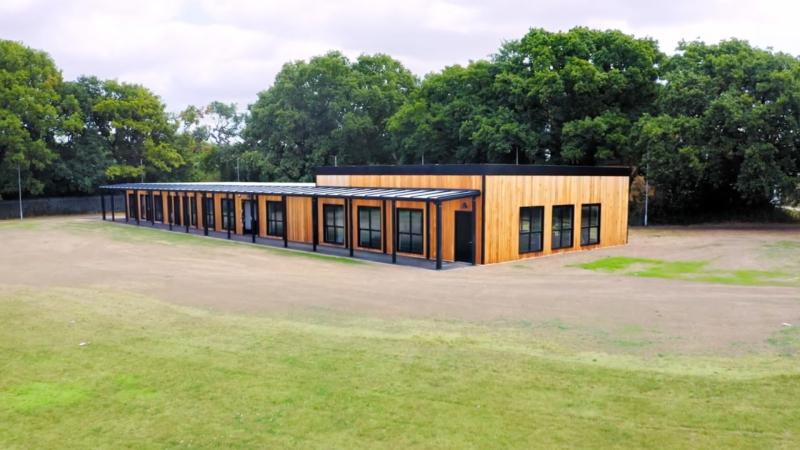
1. Understand Your Growth Drivers First
Before committing to any expansion strategy, start with a clear picture of why you need more space. Is it because of:
- Rising pupil numbers (whole school)
- Uneven distribution of SEND pupils
- Curriculum growth (STEM, arts, vocational)
- Pressure on small-group or intervention rooms
- Community use
- Temporary overflows while waiting for capital builds
A strong needs analysis ensures your budget goes where it will deliver the biggest impact, not just more square metres.
2. Leverage Permitted Development Rights (PDR) Where Possible
One of the simplest ways to accelerate and reduce the cost of expansion is to exploit (make the most of) permitted development rights (PDR).
Under current guidance, many schools can install modular buildings without full planning permission, provided they meet certain size and placement criteria. This means:
- Faster delivery
- Lower planning risk
- Less consultancy cost
- Reduced professional fees
PF Modular’s guide on Permitted Development Rights for Schools breaks down how to use this policy advantage wisely and compliantly.
3. Choose Modular When Time and Budget Matter
Traditional construction has its place, but when budgets and timelines are tight, modular construction consistently outperforms – not just on cost, but on whole-life value.
Here’s why modular makes financial sense when expanding a school’s premises:
Shorter Project Timelines
Modular classrooms are built offsite at the same time that the site is prepared, so delivery can be measured in weeks instead of months. That fast, straightforward turnaround also reduces disruption to school operations, temporary staff costs, and interim hire expenses.
PF Modular’s blog on fastracking school expansion with modular buildings shares exactly how this works.
Lower On-Site Costs
With less site disruption, fewer subcontractors, and predictable schedules, modular costs significantly less than traditional classrooms. In fact, the costs are about 50% lower than those of a traditional construction project.
Predictable Budgets
Because modular units are manufactured in controlled conditions, going over budget (a very common risk in traditional construction) is much less likely.
PF Modular’s 20+ years of experience in modular construction and educational environments means these savings don’t come at the expense of quality. Rather, the opposite, in fact, as our buildings go beyond Department for Education (DfE) recommendations and cater to BB104 guidelines for SEND provisions. We are also an accredited gold member of Constructionline, SSIP, and a full member of the MPBA.
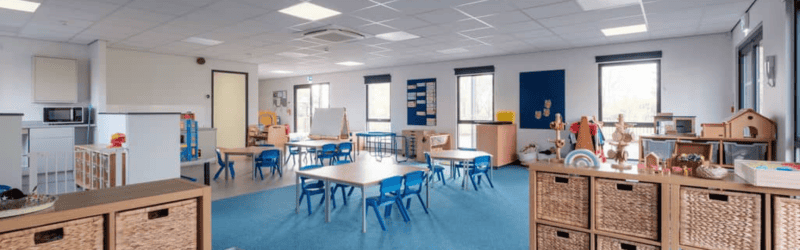
4. Match Building Types to Purpose
Schools across the UK don’t all need the same type of building expansion – needs are diverse. And since choosing the right type of modular building can save money and improve outcomes, we’re happy to offer a wide range of solutions, including purpose-built SEND classrooms, ICT suites, lecture theatres, common rooms, modular nurseries and a whole lot more. These spaces are light and bright and can also be designed to match the rest of your school building and school colours.
5. Design for Future Adaptability
When expanding, being budget-friendly isn’t just about the upfront cost; it’s about keeping your options open in case things change (as they almost always do).
Modular buildings are inherently adaptable because:
- Walls, doors and partitions can be reconfigured
- Zones can be repurposed as curriculum needs change
- Extra units can easily be added without disrupting existing use
By planning with future adaptability in mind, schools ensure their investment continues to deliver value well beyond 2026.
Expand Smart in 2026
School expansion in 2026 isn’t about choosing the cheapest option; it’s about balancing cost, quality, speed, and flexibility. Decisions made today need to stand up to scrutiny tomorrow, while still giving schools the freedom to adapt as pupil numbers, curriculum demands and SEND requirements evolve.
Modular buildings consistently deliver on all fronts.
If you’d like support assessing your site, navigating permitted development opportunities or exploring bespoke modular solutions for your 2026 expansion plans, get in touch with us at 01420 587 880. We look forward to helping you move forward with confidence!
Related Posts
16.09.2026• Modular Buildings
Traditional vs. Modular: A Cost-Benefit Analysis for Growing SMEs
For a growing SME, needing more space is usually a good problem to have. More employees, new contracts, additional equipment or an expanding operation...
Continue Reading
09.09.2026• Modular Buildings
The Hybrid Hub: Why Satellite Offices Are Replacing the Central Headquarters
The word “headquarters” signifies the unquestioned centre of business. Employees travel to it, teams are organised around it, and workspace strategy largely involves deciding...
Continue Reading
12.08.2026• Modular Buildings, Posts & News
SEN-Friendly Design: Creating Inclusive Learning Spaces in Modular Classrooms
When discussing SEND provision, the conversation tends to revolve around staffing, funding, interventions and curriculum. The building itself is rarely even on the docket....
Continue Reading